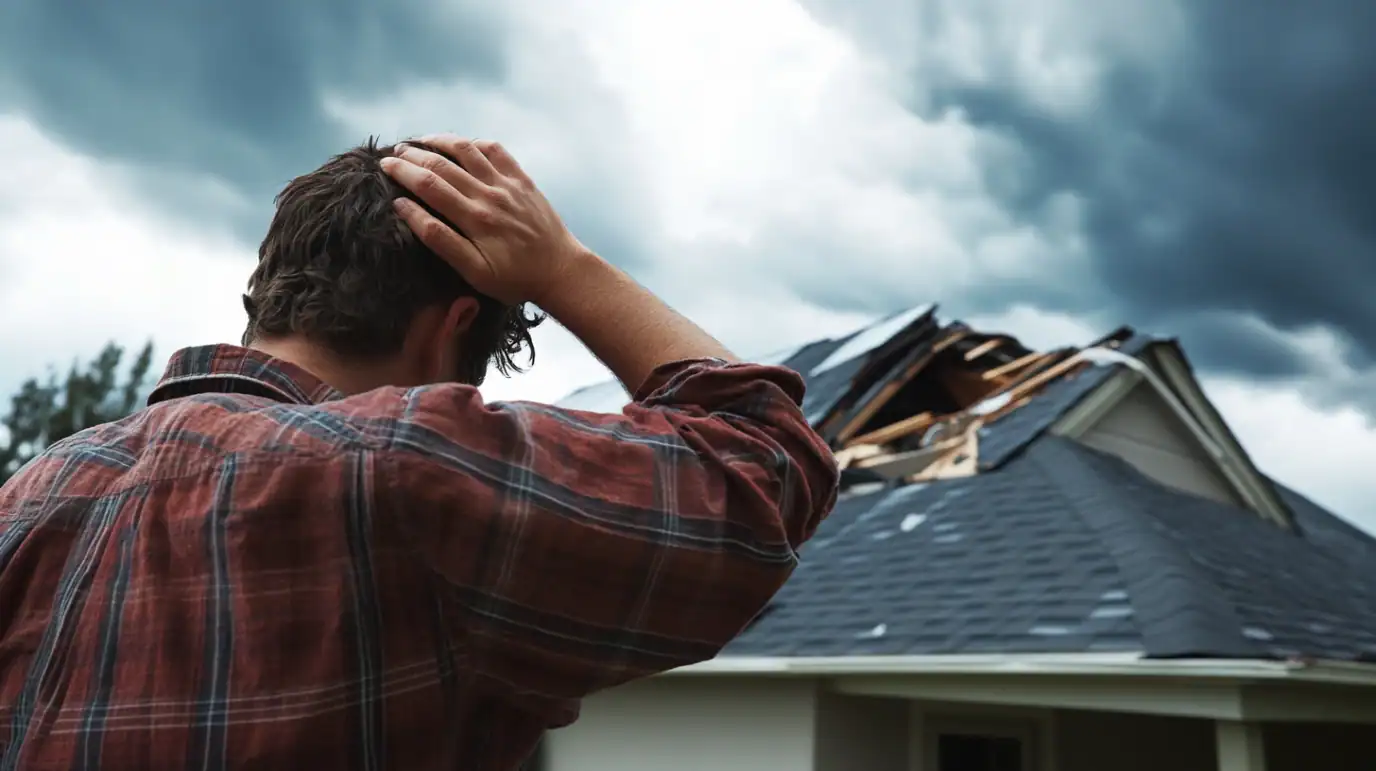
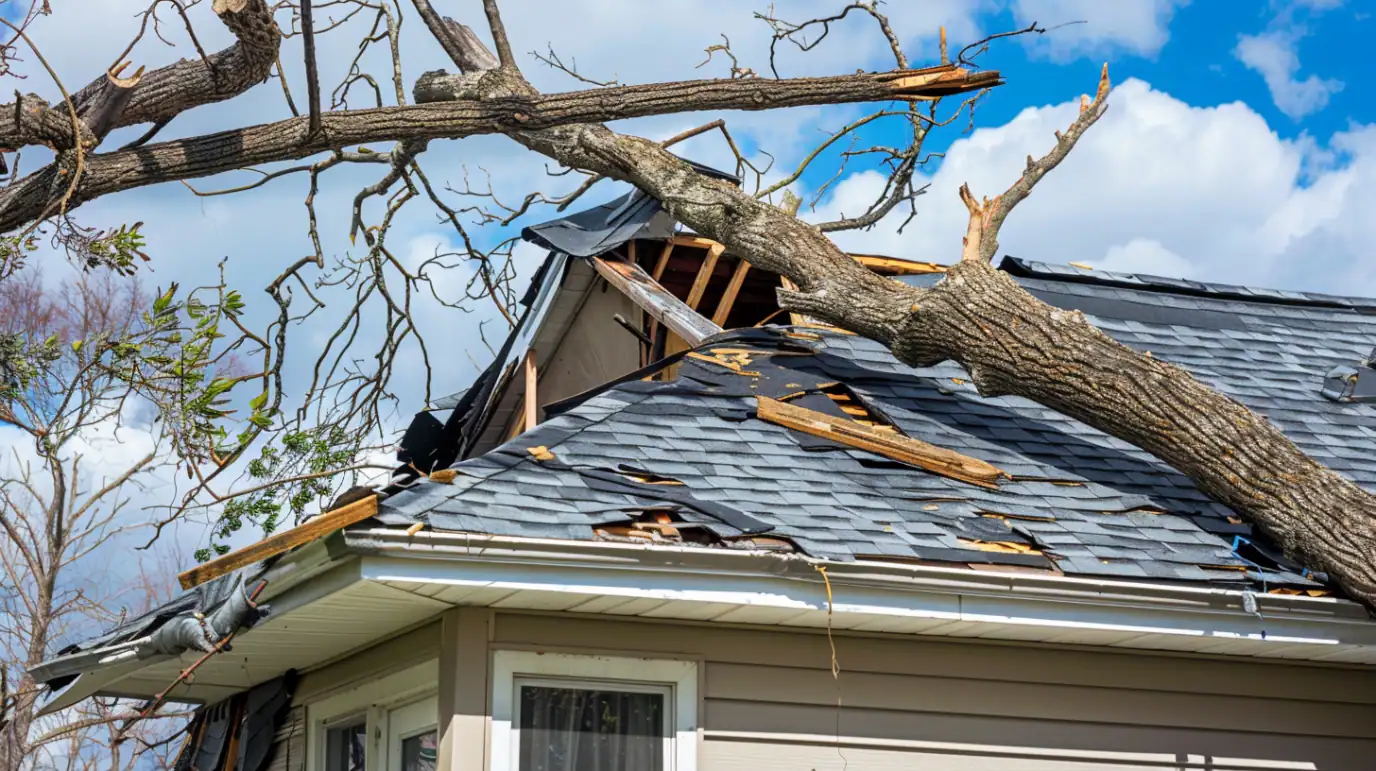
When a tree falls on your home in Portage, MI, the visible roof damage is only the beginning of the story. The stress of dealing with tree removal, repairs, and the aftermath can be immense for any homeowner. A professional roof inspection in Portage can uncover hidden decking, flashing, and structural damage that may not be visible from the ground. At Property Revolution Roofing and Decks, we know what to look for and can help you protect your home while documenting damage for your homeowners insurance claim.
Immediate Actions After a Tree Falls on Your Roof in Portage, MI
After a tree fall, taking swift and correct action is critical to prevent further damage and ensure your family’s safety. The moments following the impact can be chaotic, but a clear plan will make a significant difference. Your focus should be on securing the area and checking for gas leaks before getting professional help. Once everyone is safe, calling emergency services and a trusted roofing contractor should be your next steps. A professional can assess the situation and begin emergency repairs to protect your home from the elements. Let’s look at the immediate steps you should take.

Prioritizing Safety for You and Your Family
After tree damage, prioritize your family’s safety. Assess the area from a distance, watching for hazards like live power lines, live wires, or unstable branches. If you notice structural damage or roof leaks, evacuate and call emergency services immediately. Be aware that water intrusion can cause further interior damage. Avoid inspecting the roof yourself—hire a certified roofing contractor to assess risks and identify potential issues. Focus on your family’s well-being and seek professional help as needed.
Steps to Secure Your Property from Further Damage
After tree damage, secure your property immediately to prevent further issues. Assess for hazards like loose branches or damaged roofing, and keep a safe distance from the area. Once it’s safe, contact an emergency roofing company specializing in storm damage for a thorough inspection to identify leaks or hidden water intrusion. Document all damage carefully to support your insurance claim. A detailed record of affected areas helps your insurer process your claim faster and ensures proper coverage, followed by permanent repairs when necessary.
When and How to Document the Damage Properly
Act quickly to document roof damage after a tree fall, as property damage can escalate if not addressed. Use your smartphone or camera to take clear photos of the damaged roof and surrounding structures, including any missing shingles or compromised materials—key details for insurance claims. Create a written inventory describing all visible damage and include photos of any significant interior issues, such as water intrusion or ceiling damage. Hire a certified roofing contractor for an official inspection report; this is essential for a successful insurance claim and can provide peace of mind during this stressful time.
Understanding Hidden Roof Damage Beyond the Obvious Impact
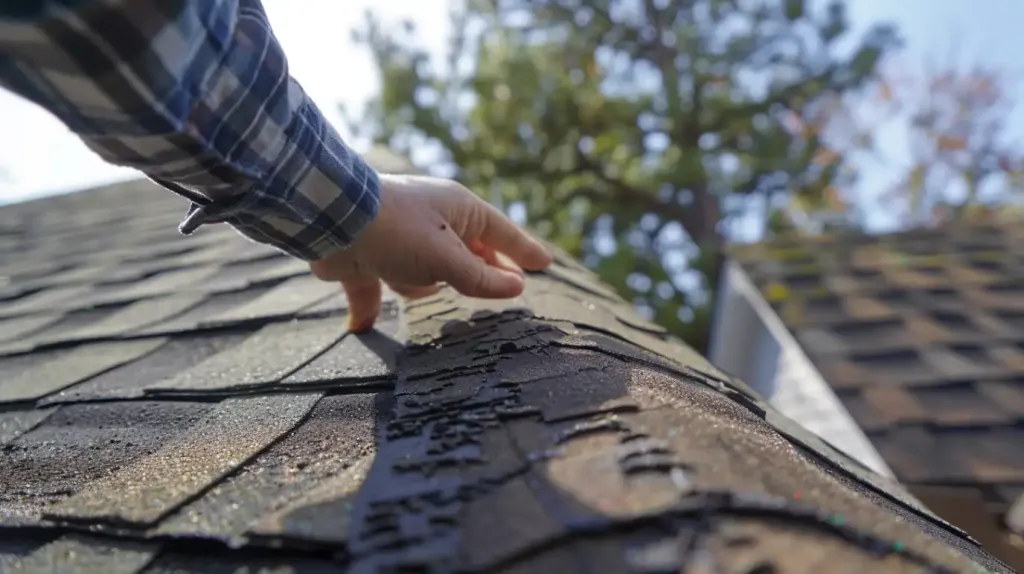
Visible holes from fallen branches are easy to spot, but serious roof damage is often hidden from plain sight. The impact can weaken the entire structure, leading to subtle issues that may escalate into major water damage later on. Therefore, don’t just check the obvious damage. A thorough inspection is the first step in uncovering less visible problems. Here are the types of hidden damage to watch for to prevent further issues and ensure your roof’s longevity.
Recognizing Subtle Shingle and Decking Issues
Prioritizing shingle and decking integrity is crucial for protecting your home long-term, especially during high winds. Subtle issues, such as missing shingles, curling edges, or granule loss, can indicate deeper problems lurking beneath the surface. It is essential to inspect your roof deck for signs of water damage or mold, which are clear indications of a compromised structure. Additionally, sagging or soft spots may suggest water intrusion. A certified roofing contractor’s thorough inspection will catch these issues early, preventing further damage and preserving your home’s integrity for many years to come.
Finding Signs of Water Leaks Inside Your Home
After tree damage, inspect your home for water intrusion. Check for ceiling or wall discoloration, peeling paint, or bubbling wallpaper—these can signal leaks even if the roof looks undamaged. Also, look for mold in attics and crawl spaces, as it can weaken your home over time. If you notice any signs of moisture, contact a certified roofing contractor immediately. Prompt action helps prevent further damage and mitigate additional damage while avoiding costly repairs.
Checking for Less Visible Structural Damage
Structural integrity is vital for the integrity of your home’s safety after tree damage. Beyond obvious signs like missing shingles or roof dents, hidden issues may exist. Water intrusion weakens the roof deck, causing long-term damage. Have a certified arborist or roofing contractor inspect your roof to identify and assess all damage, including less visible structural problems. Check inside for leaks or water stains that signal roof issues. Promptly addressing these concerns prevents further damage and ensures your home’s safety.

Key Areas to Inspect After Tree Damage
When a fallen tree strikes your roof, the impact can cause damage to several related components of your home’s exterior, including dead branches that may also pose a risk. A thorough roof inspection should extend beyond the shingles in the damaged area to prevent further damage down the line. Checking these surrounding areas is crucial for a complete assessment. Gutters, siding, and windows can all be affected by the falling tree or the force of its impact. Here are the key spots to focus on during your inspection.
Examining Gutters, Flashing, and Downspouts
After tree damage, thoroughly inspect gutters, flashing, and downspouts. These direct water away from your roof and home. Check for blockages, bends, or detachments caused by impact—damaged gutters can lead to leaks and further roof damage. Also, make sure flashing around chimneys or vents is intact to prevent interior leaks. Prompt repairs are the best way to maintain your roof’s integrity and protect against future storm or rain damage.
Inspecting the Attic for Moisture
Assessing the attic after tree damage is essential to spot hidden issues that could cause bigger problems. Check insulation for moisture, mold, damp spots, discoloration, or strange odors—signs of leaks. Inspect the visible roofing deck for water damage, which can weaken materials and threaten structural integrity. If you notice moisture, contact a certified roofing contractor promptly for assessment and repairs. Additionally, it’s important to reach out to your homeowner’s insurance provider to discuss potential claims. Acting early helps protect your home and keeps repair costs manageable.

Common Mistakes to Avoid
In the stressful aftermath of tree-related roof damage, it is easy to make mistakes that can lead to safety risks or higher emergency roof leak repair costs. Knowing what pitfalls to avoid can save you time, money, and stress during the recovery process. From attempting risky DIY inspections to ignoring small problems, certain actions can make a bad situation worse. It is crucial to approach the assessment carefully and rely on professional emergency roofing services when needed. Let’s cover some common errors to steer clear of.
Dangers of DIY Roof Inspections After Severe Impact
Attempting a DIY roof inspection after significant impact is risky. Climbing onto a damaged roof can lead to injury from unstable materials or hidden structural damage. Without expertise, you may misdiagnose issues, potentially making problems like leaks worse. A good idea is to consider that amateur inspections often miss key signs of damage from wind, fallen trees, or hail. Hiring a certified roofing contractor ensures a safe, thorough assessment and protects your home and peace of mind. Safety should always come first.

Roof Replacement vs. Repair
After a tree has damaged your roof, one of the biggest questions is whether you need simple roof repairs or a full roof replacement. The right choice depends on the age of your roof, the extent of the damage, and the type of damage sustained. A trusted roofing company like Property Revolution Roofing and Decks can provide an honest assessment to help you make the best decision regarding a full replacement. Understanding the signs that point toward replacement will prepare you for this conversation. Let’s review the key factors to consider.
Signs That Warrant Full Roof Replacement
Signs that you may need a full roof replacement after tree damage include missing shingles, severely damaged roofing materials, and structural issues with the entire roof deck. These problems increase the risk of water intrusion and further damage if left unaddressed. Watch for hidden leaks or sagging areas, which suggest your home’s integrity is at risk. Hire a reputable roofing contractor for a thorough inspection to assess storm damage and potential hazards. Recognizing these signs helps you make informed decisions about replacing your roof.
Roof Insurance Coverage and Claim Tips
Navigating home insurance coverage after tree damage can feel complicated. Most standard homeowners insurance policies in Portage, MI cover damage from fallen trees, especially if it was caused by a storm or another event beyond your control, such as wind damage. Understanding your policy and how to properly file insurance claims can make a huge difference in the outcome. Working with insurance companies is much smoother when you are prepared. Here are some insights into what to expect from your insurance coverage.
What Insurance Typically Covers After Tree Damage
Homeowners insurance often covers roof damage from fallen trees, including repairs to shingles and other materials. A fallen tree can cause significant damage, so emergency repairs to prevent further water or structural damage may also be included. To ensure a smooth claims process, understand your policy and what it covers. Insurance adjusters will assess the damage and may cover tree removal if it blocks access or creates hazards. Review your policy for specific clauses on storm damage and tree falls to avoid unexpected costs.
Tips for Filing Roof Damage Claims Successfully
Navigating insurance claims after roof damage from a fallen tree in the United States can be challenging. Begin by taking clear photos and keeping a detailed inventory of all affected areas and materials—this documentation is essential for your insurance adjuster. Carefully review your homeowners policy to understand what damages are covered. Hire a certified roofing contractor for a professional inspection to support your claim. Stay in regular contact with your insurance provider and follow up as needed to improve your chances of claim approval and peace of mind.
Why Choose Us
In conclusion, roof damage from a fallen tree in Portage, MI often goes beyond what’s visible. Hidden issues, including potential hail damage, can become costly if ignored. Inspect your attic, gutters, and siding to catch problems early. At Property Revolution Roofing and Decks, we treat your home like our own. As a GAF Master Elite Contractor with a BBB A+ rating, we offer honest assessments and quality service. Contact us today to discuss your roof’s needs.
Frequently Asked Questions
How soon should I call a roofing contractor after tree damage?
You should call a roofing contractor immediately after ensuring everyone is safe and addressing immediate safety concerns. Quick action is essential to get emergency services on-site to assess the roof damage and prevent further damage from leaks, especially after storm damage.
Can tree damage affect the attic or gutters even if they look fine?
Yes. The impact from tree damage due to heavy rain can misalign gutters or cause hidden leaks that show up in the attic. A thorough roof inspection is necessary to check these areas for subtle issues that could lead to further damage.
Read our blog: Roof Replacement Budgeting in Portage, MI: What Drives the Price Up Besides Size