
Before spring thunderstorms reach Portage, check for roof defects left by winter and address maintenance that could allow wind-driven rain inside. A practical preparation plan covers shingles, flashing, roof penetrations and drainage. It reduces avoidable vulnerabilities without promising protection from every severe storm.
A local reason to prepare
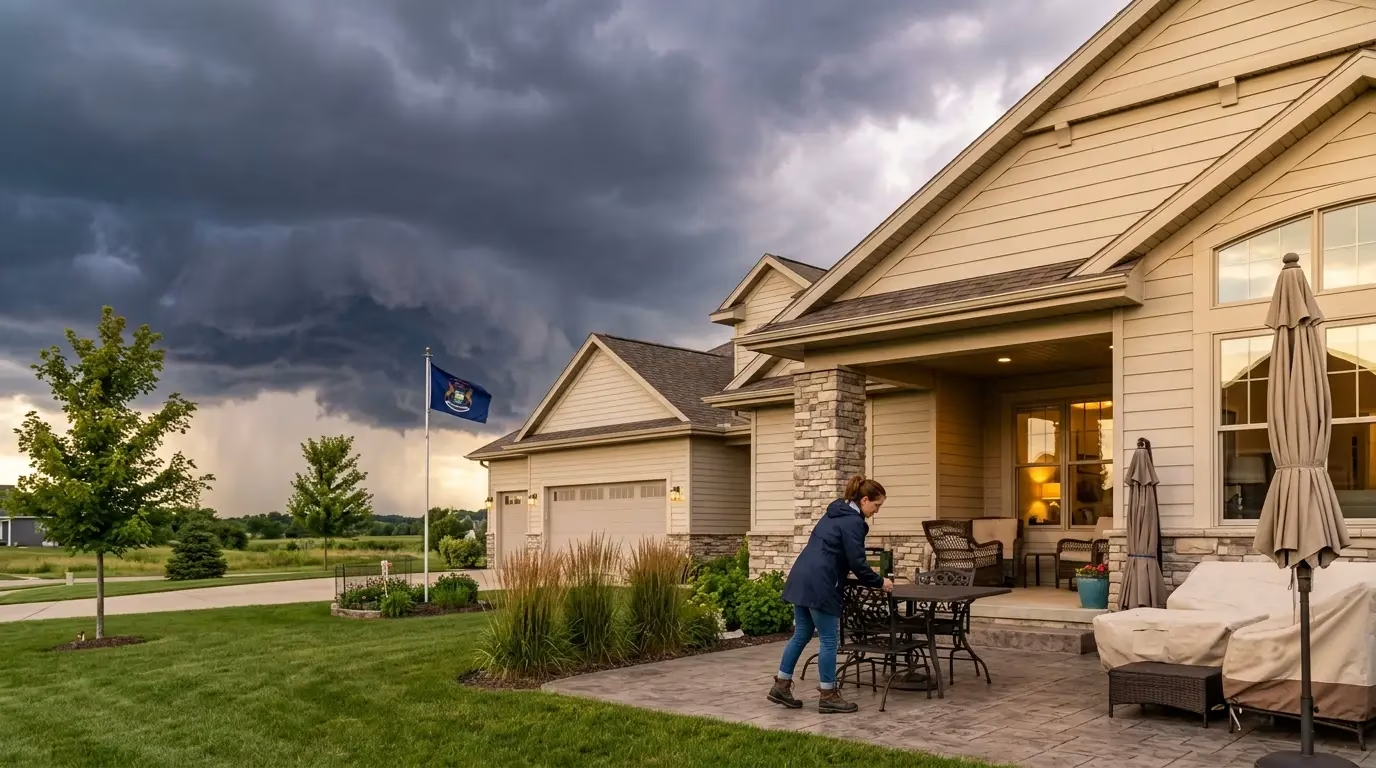
The National Weather Service documented an EF-2 tornado through Portage on May 7, 2024. This historical event illustrates the potential severity of local storms; it is not a forecast or evidence that any particular roof was damaged. During a warning, follow official shelter guidance. Roof inspection belongs before a storm or after conditions are safe.
Pre-storm checklist
| Area | What to report from safe access |
|---|---|
| Shingles and roof edges | Missing pieces, visible lifting or newly uneven edges |
| Flashing and penetrations | Visible gaps, displaced metal or recurring interior stains |
| Gutters and downspouts | Overflow, disconnected sections and debris restricting water flow |
| Nearby trees | Broken or overhanging limbs requiring a qualified tree professional |
| Inside the home | Changes in ceiling stains, attic moisture or previous leak locations |
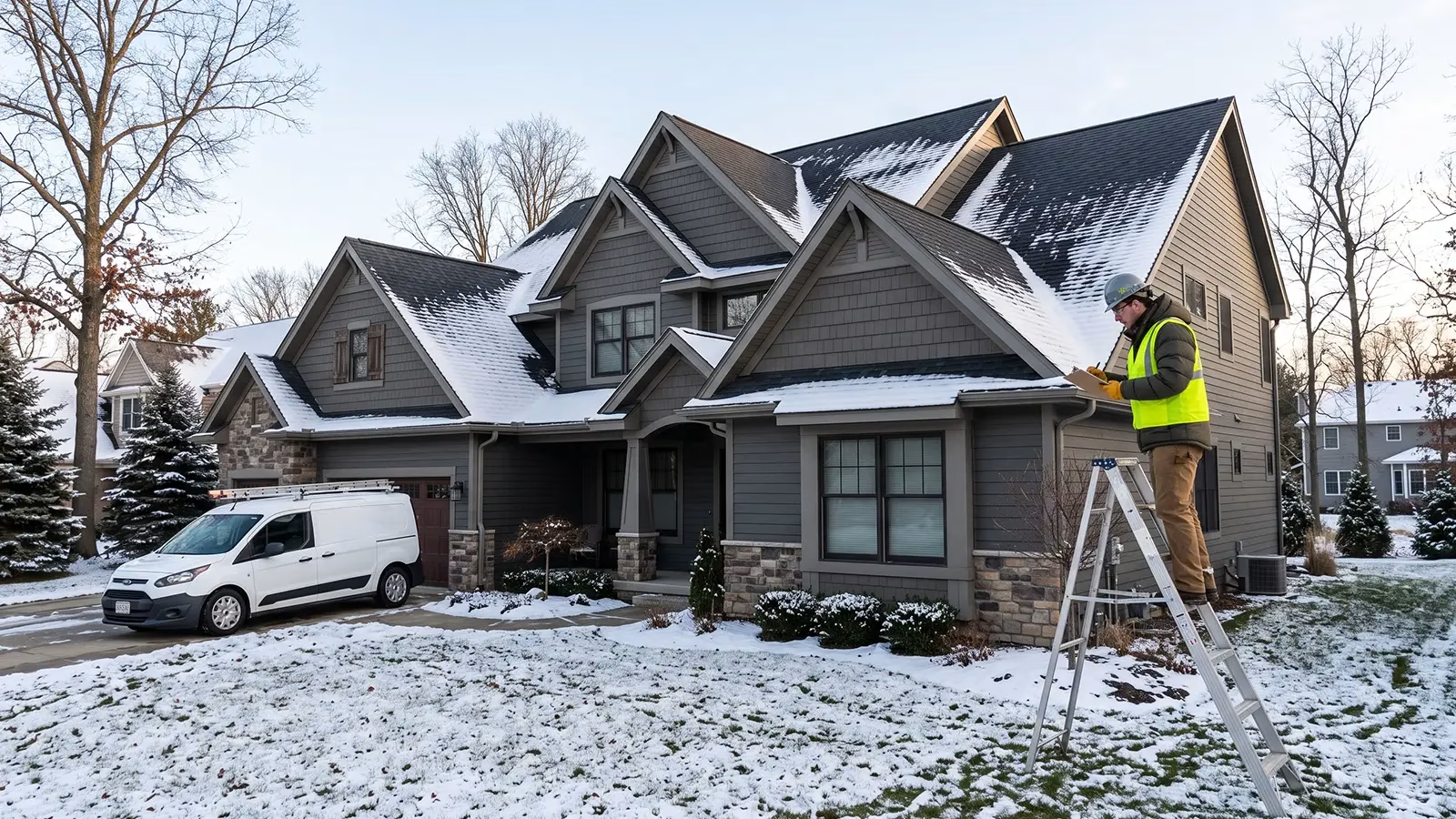
Use ground-level observations and photographs. Close-up inspection, gutter work at height and repairs should be assigned to appropriately equipped professionals. Do not walk a roof or disturb shingles to test them.
Repair weaknesses before the next rain
Roof-to-wall transitions, chimneys and penetrations can admit water even when most shingles look sound. Ask whether the repair corrects the water-shedding detail or merely covers it with sealant. PNNL’s flashing guidance illustrates the need to integrate roof and wall layers.
Downspouts should discharge appropriately for the property without sending water toward the house, neighbouring property or an unsuitable drainage route. The correct arrangement depends on the site; one universal extension length is not a complete drainage design.
Keep preparation separate from winter diagnosis
If snowmelt has revealed staining or damaged drainage details, begin with our spring roof inspection after freeze–thaw season. That assessment looks for existing winter damage. This pre-storm checklist addresses what to correct before the next event. The Portage maintenance calendar helps organise both tasks.
Have your records ready
Keep dated photographs of the roof and exterior taken from safe locations, past repair records and insurer contact information. Review your policy’s reporting requirements before an emergency. After damage, documentation supports an assessment but does not guarantee coverage.
If a storm has already passed
Use the Portage wind and storm damage guide for safe observations and next steps. Do not assume a roof is undamaged because no shingles are missing. For future replacement planning, our wind-resistant roofing guide explains the difference between a product rating and the performance of a complete installed system.
Discuss your Portage roof
Property Revolution Roofing and Decks provides roof repair and replacement in Portage. Tell our team what you have noticed and ask which assessment is appropriate for your project. Free estimates apply to full-service work; repair assessment options and scheduling depend on the situation.
Frequently asked questions
Does preparation make a roof tornado-proof?
No. Sound installation and maintenance address known vulnerabilities but cannot guarantee survival in extreme winds.
Should I have an inspection after every rain?
Rain alone does not establish damage. New leakage, displaced materials, debris impacts or recurring symptoms justify contacting a professional.