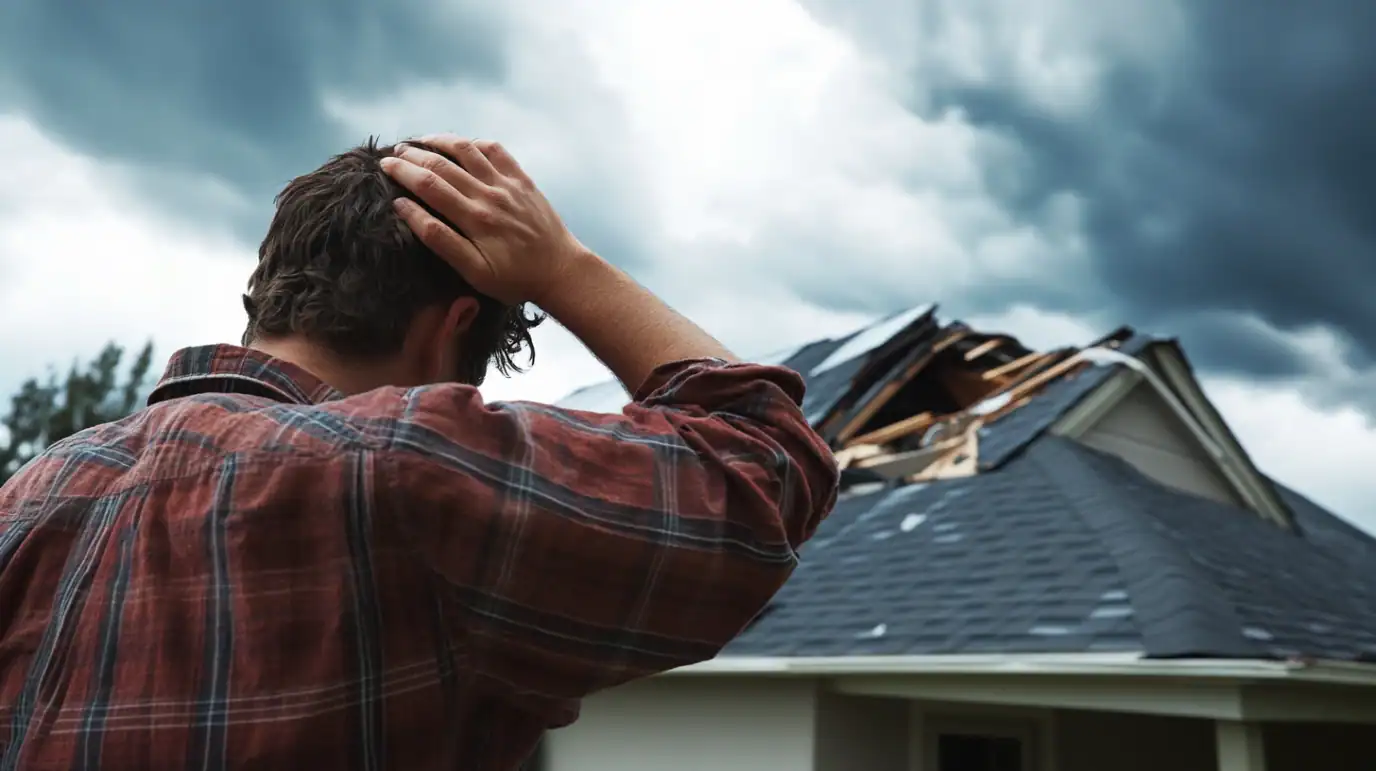

After strong wind passes through Portage, look for changes from safe ground-level positions and document what you see. Missing shingles are one sign, but lifted edges, displaced flashing and falling debris can also require assessment. A visual symptom does not by itself establish the cause, structural condition or insurance coverage.
Safety and the first observations
Stay away from downed power lines, unstable trees and damaged structures. Do not climb onto a wet or potentially damaged roof. If safe, photograph roofing pieces on the ground, changes at roof edges, gutter damage and new interior stains. Note the date and what you observed before arranging repairs.
Wind damage, aging or installation problems?
| Observation | What needs investigation |
|---|---|
| Missing or creased shingles | Damage pattern, surrounding condition and attachment |
| Lifted edges | Storm exposure, fastening, seal condition and prior repairs |
| Granules in gutters or curled shingles | Wear, installation, material condition and other causes; not proof of wind damage alone |
| New stains after rain | The water-entry route and concealed conditions |
Our lifted-shingle and fastener guide explains why the diagnosis matters. Wind-related damage and pre-existing deterioration can occur on the same roof.
Local storm context
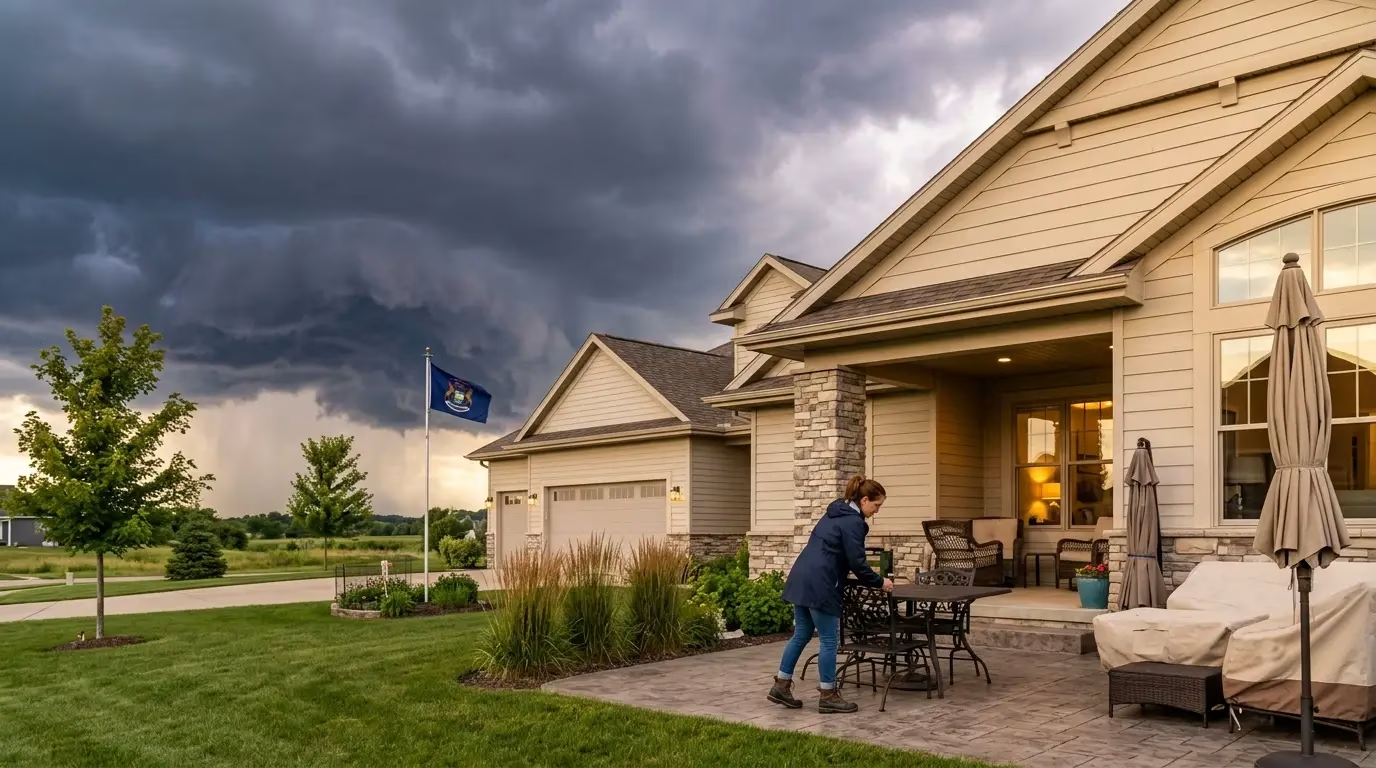
NWS documented the Portage EF-2 tornado of May 7, 2024. It is a dated example of local severe-weather risk, not proof of damage to your property. A storm warning describes a threat; it is different from a confirmed damage report. For a specific insurance claim, use accurate dates and property-specific findings.
Inspect the complete exterior
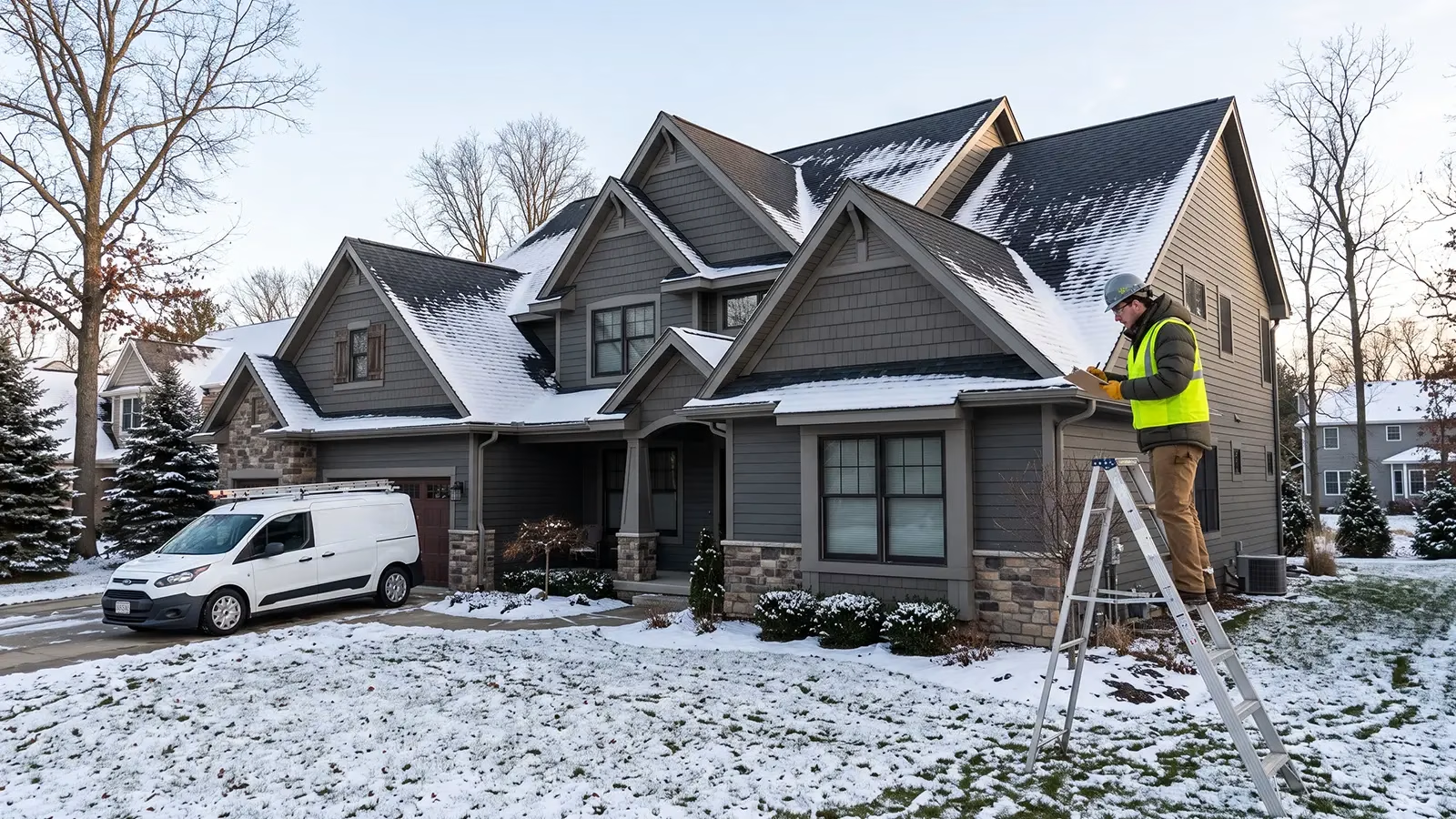
A professional assessment may include ridge and hip components, flashing, pipe boots, vents, roof edges, gutters and accessible attic conditions. Siding and trim can also be affected. Our Portage tornado-damage siding project documents exterior restoration; its completed scope should not be confused with a roof replacement.
For a tree impact, use the separate tree-damage assessment guide. A small puncture and a structural impact require different responses. For suspected hail, use the hail-photo checklist rather than treating every dent as a confirmed roofing failure.
Repair or replacement?
An isolated defect may be repairable when the surrounding roof remains serviceable. Widespread deterioration, repeated leakage or extensive damage may change the recommendation. Ask for photos, an explanation of the findings, the proposed scope and any need to assess concealed decking or framing.
For urgent water entry, contact our Portage emergency roof repair team to discuss current availability. Keep receipts for temporary protection and follow your policy’s notification requirements. Michigan DIFS storm guidance explains insurance considerations; the insurer determines coverage. See our roof claim documentation guide for records to organise.
Discuss your Portage roof
Property Revolution Roofing and Decks provides roof repair and replacement in Portage. Tell our team what you have noticed and ask which assessment is appropriate for your project. Free estimates apply to full-service work; repair assessment options and scheduling depend on the situation.
Frequently asked questions
Does a roof that looks normal need replacing?
Appearance from the driveway cannot decide that. An inspection should identify actual damage and distinguish repairable problems from broader deterioration.
Should I lift a shingle to test the seal?
No. Disturbing roofing can cause damage and does not establish when or why a problem occurred. Leave close-up assessment to a qualified professional.
Can I prevent future wind damage?
Maintenance and a correctly installed system address avoidable weaknesses. Our wind-resistant roofing guide explains system details and the limits of product ratings.