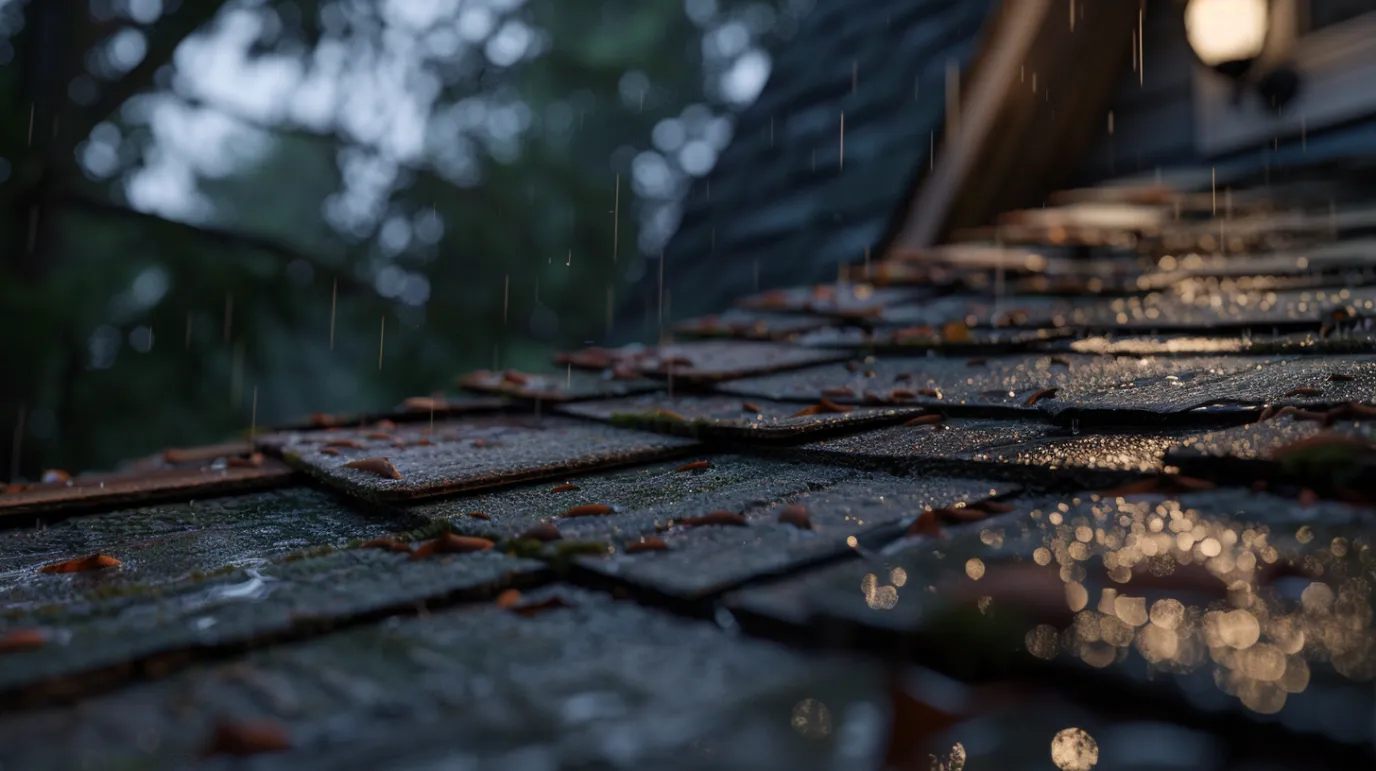
A ceiling stain tells you where water became visible, not necessarily where it entered. In a Portage home, rainwater can travel along framing or a roof transition before reaching the room below. A useful inspection traces the route and distinguishes roof entry from condensation or another moisture source before specifying repairs.
Use timing to guide the investigation
| Pattern | Areas to investigate |
|---|---|
| Leak during wind-driven rain | Roof-to-wall flashing, penetrations, roof edges and damaged roofing |
| Leak during snowmelt | Ice-dam entry, roof transitions and existing defects |
| Moisture in cold weather without rain | Attic condensation, indoor air leakage and exhaust ducts |
| Leak at an addition | The junction with the main house, low-slope membrane and drainage |
These are starting points, not diagnoses. Note the date, weather and affected room, and take photographs from safe locations. Moisture can have more than one cause.
Five checks after fall rain
- Look for new or expanding ceiling stains.
- Report damp insulation visible from safe attic access.
- Observe overflowing gutters from the ground.
- Look for displaced shingles or loose roof-edge materials.
- Identify recurring leaks, including areas previously repaired.
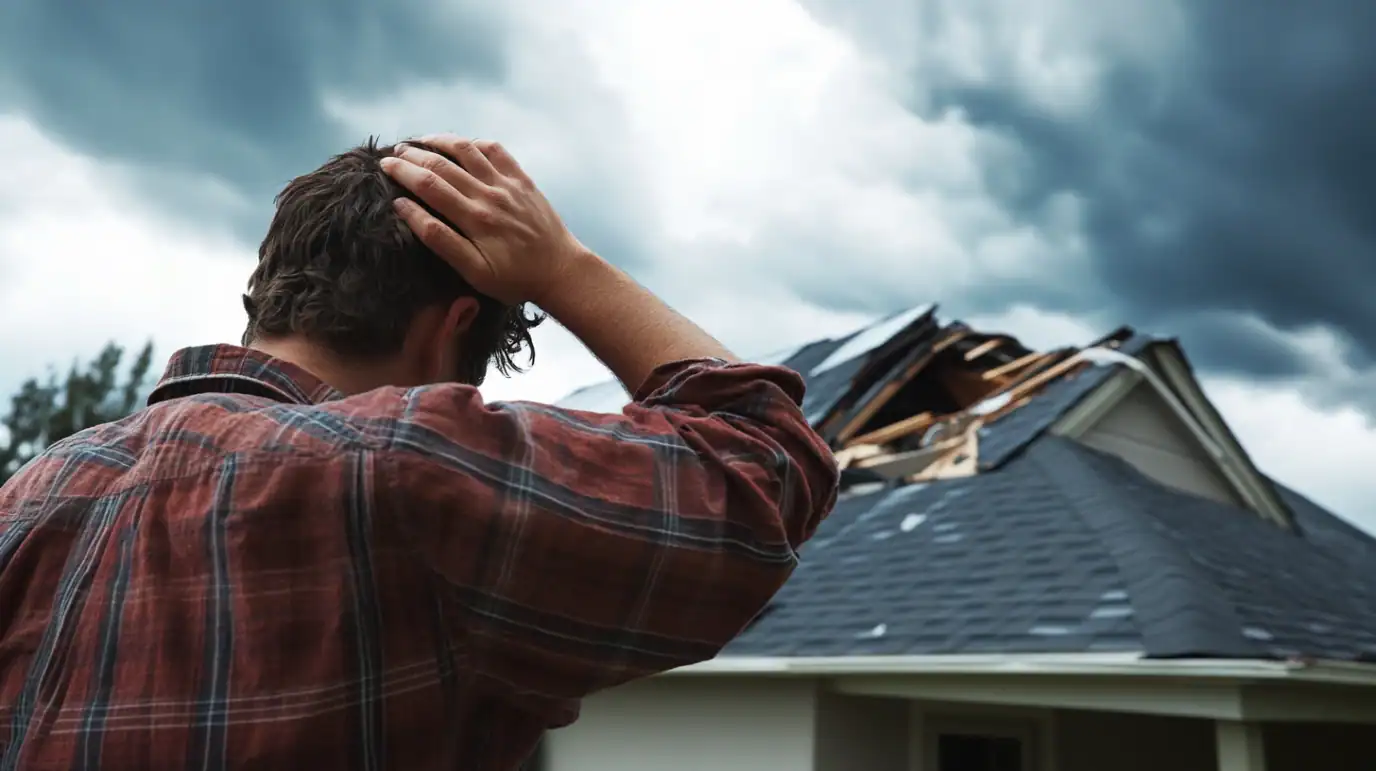
Do not climb onto a wet or damaged roof to confirm a suspicion. For an active leak or sudden damage, contact our Portage emergency roof repair team to discuss current availability.
Flashing and pipe boots
Roof-to-wall intersections and penetrations need properly integrated water-shedding details. Sealant smeared over a symptom may leave the underlying defect in place. See step, counterflashing and kickout flashing and vent-pipe boot leaks for the different repair questions. PNNL’s flashing guidance illustrates how roof and wall drainage layers work together.
Drainage, ice dams and condensation
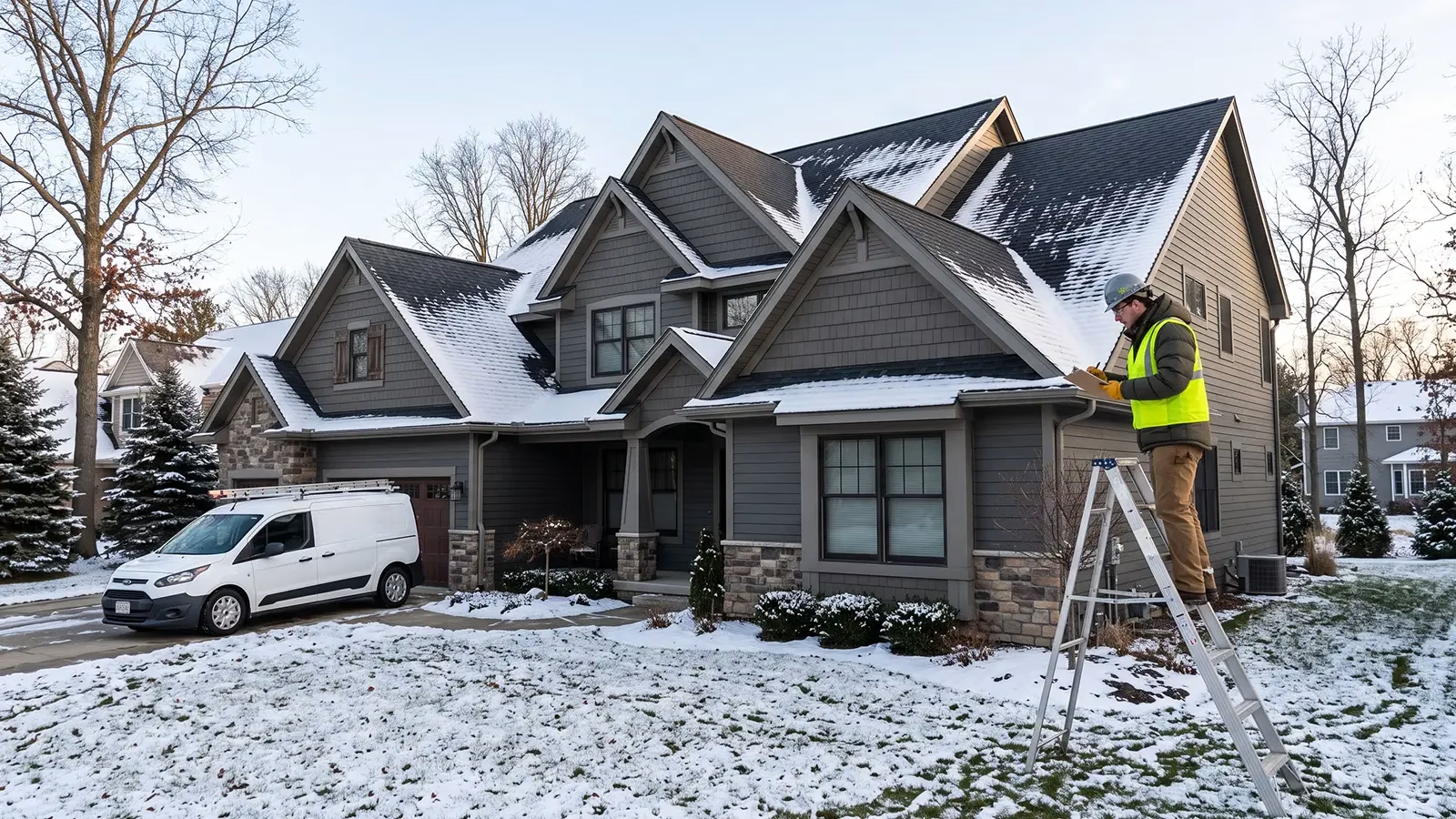
Clear gutters help drainage, but do not by themselves correct heat loss into a roof assembly. Michigan’s ice-dam guidance explains the melting and refreezing process. If dampness appears without rain, investigate attic condensation rather than assuming shingles have failed. A low-slope porch or garage may need a separate drainage and membrane assessment.
What should the assessment explain?
Ask for photographs, the suspected moisture route, the condition of surrounding materials and the proposed repair. A local defect may be repairable; widespread deterioration, repeated failures or damaged decking may change the recommendation. The age of the roof is one factor, not a diagnosis.
Portage’s 2024 master plan documents a substantial stock of homes built before 1980. For an existing home, ask how previous repairs or additions affect the investigation. Their presence must be checked at the property. If work affects decking or structure, consult the Portage planning and permit guide.
Discuss your Portage roof
Property Revolution Roofing and Decks provides roof repair and replacement in Portage. Tell our team what you have noticed and ask which assessment is appropriate for your project. Free estimates apply to full-service work; repair assessment options and scheduling depend on the situation.
Frequently asked questions
Does a leak require full replacement?
Not automatically. The extent of damage, surrounding roof condition and feasibility of a durable repair determine the options.
Can intact shingles still leak?
Yes. Water may enter at flashing, penetrations, transitions or other details even when no shingle is missing.
Should a dry stain be ignored?
No. Photograph it, note whether it changes after weather events and have the cause assessed. Appearance alone does not establish whether the material behind it is dry.