
If you have a low-slope or flat roof in Portage, MI, you might notice puddles lingering long after a storm. This is called ponding water, and it can be a serious threat to your home’s integrity. At Property Revolution Roofing and Decks, we treat your home like our own. As your local commercial roofing contractor, we specialize in roof repair solutions that fix drainage issues effectively, giving you peace of mind.
Understanding Ponding Water Issues on Low-Slope Roofs
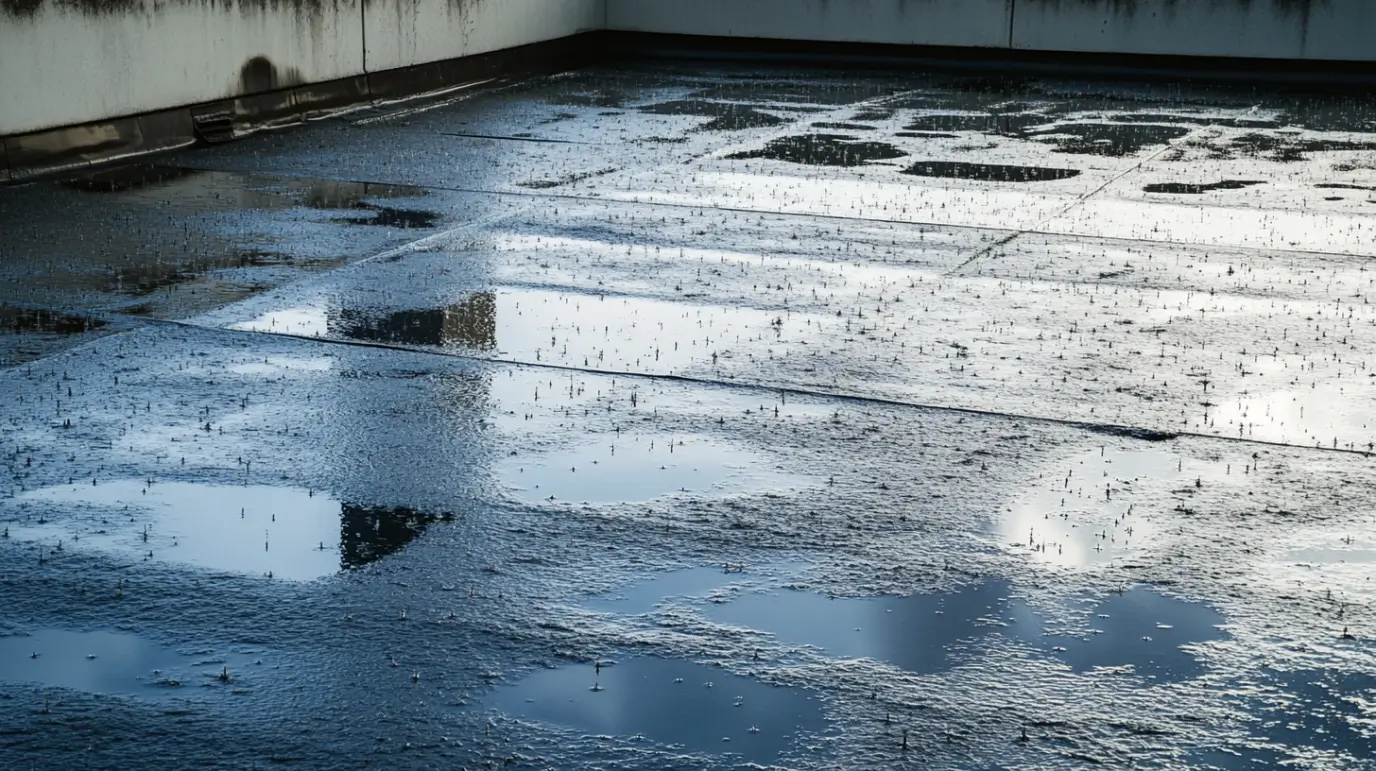
Water ponding occurs when water fails to drain from your roof within 48 hours. On flat roofing systems, even small depressions can trap moisture, putting constant stress on the roof membrane. This trapped water is more than just an eyesore; it’s a sign that your roof’s drainage is not working as it should and needs attention.
Understanding why this happens is the first step toward a solution. The causes can range from simple blockages to issues with the roof’s structure itself. We will explore how ponding water develops on your roof and the specific challenges our Portage, MI climate presents, helping you identify the right fix for your home with comprehensive warranties for added peace of mind.
Contact Us
How Ponding Water Develops and Why It’s Common on Low-Slope Roofs
Ponding water typically develops due to inadequate drainage systems, where low-slope roofs struggle to channel water away effectively. Without a proper taper or slope, water collects in low spots, increasing the risk of moisture intrusion and material degradation. This accumulation is especially common during heavy rainfall, high winds, or after severe weather events, as the roof’s surface cannot facilitate a positive drainage flow. Regular roof inspections are essential for identifying these issues before they lead to costly repairs or structural integrity concerns.
The Unique Climate Challenges in Portage, Michigan
The climate in Portage, Michigan, presents several unique challenges for effective roof drainage. Heavy rainfall and significant storm damage during the spring and summer can quickly lead to water ponding on low-slope roofs. Intense UV radiation and fluctuating temperatures may further exacerbate the wear on roofing materials, risking moisture intrusion. Property owners must consider the effects of these severe weather events on their roofs’ integrity, engaging in regular roof inspections to identify potential issues before they escalate into costly repairs.
Risks of Ignoring Poor Drainage and Ponding on Your Roof
Neglecting ponding on low-slope roofs can lead to severe consequences, including moisture intrusion that compromises the structural integrity of your property. Prolonged standing water may result in leaks, fostering an environment for mold growth and necessitating costly repairs. Moreover, the risk of significant storm damage increases, elevating the urgency for reliable roof inspections. Without immediate action, property owners could face accelerated wear on roofing materials, diminishing energy efficiency and potentially leading to the need for a full roof replacement.
Leaks and Structural Damage from Standing Water
Standing water on low-slope roofs poses a significant risk to structural integrity, leading to leaks and costly repairs. When water collects due to inadequate drainage, it can infiltrate roofing materials, accelerating moisture intrusion and causing water stains on the roof’s surface, compromising the roof’s integrity. This ongoing issue can cause heavy rainfall to exacerbate damage, requiring immediate attention from roofing professionals. Implementing best practices, such as regular roof inspections and proactive drainage solutions, ensures the longevity of roofing systems and ultimately protects property owners from expensive emergency roof repairs.
Health Concerns and Premature Roofing Wear
Standing water on low-slope roofs can lead to significant health concerns due to moisture intrusion, fostering mold and mildew growth. This not only threatens the building’s occupants but also compromises the roof’s integrity, accelerating its wear and shortening its service life. Routine maintenance, including regular roof inspections, is crucial for identifying these issues before they escalate into costly repairs. A proactive approach, including proper drainage solutions, can mitigate these risks, ensuring a safe environment and prolonging the lifespan of your roofing system.
Affordable Solutions to Improve Roof Drainage Without a Full Tear-Off
The good news is you often don’t need an expensive tear-off to fix ponding water with our new roof installation services. We offer affordable repairs to restore drainage and protect your roof. Prompt attention can save you thousands and extend your roof’s life.
As a BBB A+ business, we focus on solutions that fit your home and budget. From minor adjustments to advanced installations, effective options exist to manage water flow. Here are some of the most common methods for improving drainage on low-slope roofs.
Installing Additional Drains and Scuppers on Low-Slope Sections
Enhancing roof drainage on low-slope sections often involves strategically installing additional drains and scuppers. This proactive approach aids in managing water ponding, directing the flow of water efficiently away from critical areas. By collaborating with roofing professionals, property owners can optimize their roof’s integrity and ensure that advanced roofing systems adhere to the highest industry standards. Implementing these components not only mitigates the root cause of drainage issues but also prolongs the service life of the roofing material while improving energy efficiency.
Using Tapered Insulation or Crickets to Guide Water Flow
Implementing a tapered insulation system or crickets can significantly enhance water drainage on low-slope roofs. By creating an adequate slope, these solutions promote the positive flow of water toward drainage points, effectively reducing ponding. This proactive approach not only mitigates moisture intrusion but also preserves the roof’s integrity, extending its service life. Regular inspections and maintenance ensure these installations perform optimally, providing peace of mind and preventing costly repairs due to standing water and potential structural damage.

Advanced Repair Options
Implementing advanced repair options such as protective roof coatings and membrane overlays can significantly enhance the longevity and performance of low-slope roofs. These solutions create a seamless barrier that prevents moisture intrusion and addresses the root cause of ponding water challenges. Protective coatings not only improve energy efficiency but also extend the service life of roofing materials by safeguarding against intense UV radiation and severe weather conditions. Roofing experts recommend these methods as proactive measures to maintain roof integrity and avoid costly repairs down the line.
How Modern Coatings Prevent Water Buildup
Innovative roof coatings serve as a proactive solution to prevent water buildup on low-slope roofs. By creating a seamless and reflective surface, they help promote positive drainage, mitigating the root cause of ponding water. These modern materials also offer enhanced durability against severe weather events, ensuring the roof’s integrity is preserved. Regular roof inspections and maintenance of these coatings can extend the roof’s service life, providing peace of mind to property owners while minimizing potential costs associated with further damage.
Membrane Overlays for Enhanced Durability Without Replacement
Membrane overlays serve as a robust solution to enhance the durability of low-slope roofs, particularly in areas prone to severe weather events. These overlays effectively provide a protective layer over existing roofing materials, improving the roof’s integrity and energy efficiency. With superior craftsmanship, these installations can help prevent moisture intrusion and extend the service life of the roof. This proactive approach not only addresses water ponding issues but also alleviates concerns for building owners seeking cost-effective solutions without requiring a full roof replacement.
Get in Touch
Addressing ponding water on low-slope roofs in Portage, MI is essential to protect your home. At Property Revolution Roofing and Decks, we understand local climate challenges and offer targeted solutions—often without a full tear-off. Techniques like installing drains or tapered insulation improve drainage and extend your roof’s lifespan. Our quality workmanship ensures your home is cared for. Contact us today for a personalized assessment and quote to safeguard your investment.
Frequently Asked Questions
How much to fix roof ponding?
The cost of a roof repair for ponding water varies. Simple fixes like clearing drains might be inexpensive, while installing a tapered system is more involved. To avoid costly repairs later, contact our roofing company for a free, accurate estimate tailored to your roof’s needs.
What is the minimum slope to avoid ponding?
For most flat roof systems, roofing professionals recommend a minimum slope of at least ¼ inch per foot to ensure proper drainage. However, building codes and roofing materials can vary. An adequate slope is critical to prevent water from pooling and causing damage over time.
Read our blog: Roof Flashing 101 for Portage Homes: Step Flashing, Counterflashing, and Kickout Flashing