A brown ring on the ceiling can show up on the first mild afternoon after snow, even when the sky is clear. In Plainwell and nearby Otsego, that timing is a useful clue. Snowmelt can back up behind ice at the roof edge, while frost that formed inside a cold attic can thaw and drip from above. A leak around a chimney or vent can leave a similar mark.
November is a good time to know what to look for. In nearby Kalamazoo, the 1991–2020 climate normals show an average of 15 November days with a low at or below 32°F. The first time you see a spot, note when it appeared, where it is and what the roof looked like from the ground. Those observations can help a contractor narrow down the source. National Weather Service climate normals for Kalamazoo
1. Match the stain to the weather
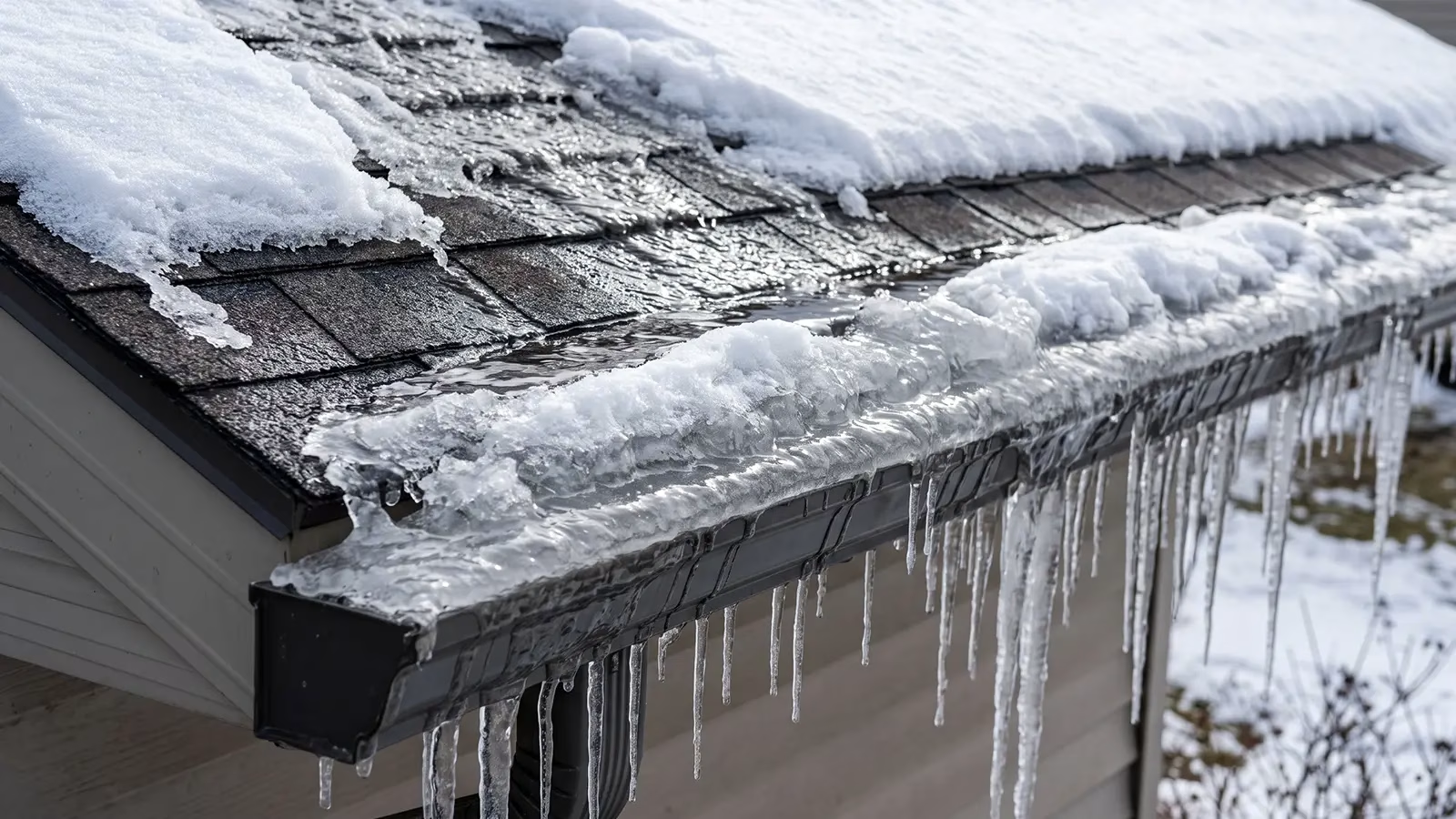
After snow begins to melt. Look from the ground for a ridge of ice along the eaves or a stretch of gutter packed with ice. Snow can melt higher on a roof, run down and freeze at the colder overhang. As that ridge grows, water can pool behind it and work under the shingles. A new mark near an exterior wall, especially beneath the same stretch of roof, gives a roofer a place to start. Michigan’s guide to roof ice dams
After a cold stretch, with little rain or snowmelt outside. Warm, moist air can escape into a cold attic and condense on cold surfaces. That moisture can freeze and then drip as the attic warms. An upstairs bathroom fan that vents into the attic, gaps around an attic hatch or air leaks around ceiling fixtures are worth asking about. A professional can check for clues such as frost or dampness across several areas and determine whether air sealing, insulation or ventilation needs attention. ENERGY STAR attic air sealing guide
During rain or whenever the same spot gets wet. Note whether the mark is near a chimney, skylight or roof-to-wall junction. Flashing is the material that directs water away from those joints. A roof inspection can trace the water path because moisture may travel along the roof decking or framing before it reaches the ceiling. A stain beneath a bathroom or plumbing line is also worth flagging when you call. Property Revolution’s guide to leaks on complex rooflines
When a stain shows up in a thaw and again in rain
Say you walk upstairs on a mild afternoon in Plainwell and see a brown ring over the landing. From the driveway, you can see snow higher up the roof and a band of ice along the edge. A few days later, with the roof clear, you notice the same patch darkening during a rainstorm. Tell the roofer about both episodes. The thaw gives them a reason to check the eaves. The rain gives them a reason to look farther up that roof slope, including around any vents or joints where water could get in.
If you can see into the attic from an opening you can reach safely, note any visible frost or damp patches and where they are in relation to the room below. Leave a high hatch or an attic with limited footing to the inspector. If the stain is spreading or water starts dripping, call as soon as you notice it and share the details you already have. ENERGY STAR guidance on signs of attic moisture and difficult access
2. Take two photos and make a short note
From inside the room, take one photo that shows where the stain sits and one close-up. Write down the date, whether it was raining or thawing and whether the spot grew or started dripping. If there’s a safe view from the yard, take one more photo of the roof edge on that side of the house. Stay clear of overhangs with hanging ice and leave roof and ladder work to a professional. University of Minnesota Extension’s ice-dam guidance
For example, “Upstairs bedroom, above the window, damp after the snow started melting, ice visible on the gutter above it” gives the inspector more to work with than “water stain.” If the stain is spreading, the ceiling is sagging or water is close to a light fixture, keep people clear of the area and call for help promptly. For an active roof leak, see our emergency roof repair page.

What to tell the roofer when you call
Say whether the stain is under the main roof, an addition or a finished attic. Mention any recent work in that area, such as a replaced skylight, chimney repair or a new bathroom fan. If you know when that work was done, have the date handy. When the inspector arrives, show them the affected room and point out where the attic opens.
If snow still covers part of the roof, ask which areas the inspector can see on the first visit and which may need a second look once the snow clears. The same question helps if a finished ceiling hides part of the attic. Knowing what the inspection could see will help you understand any follow-up work the roofer recommends.
3. Ask what the inspection found before choosing a repair
A localized problem around a vent or flashing may call for a targeted repair if the surrounding roof is in good shape. If ice returns to the same eave every winter, ask what may be warming that section of roof and whether a weatherization professional should evaluate the attic. Keep gutters and downspouts clear so meltwater has a path away from the house, and have someone handle any work that requires a ladder. If the inspection finds widespread wear or multiple leaks, ask how much of the roof is affected and what repair and replacement would each address. ENERGY STAR’s guide to attic ventilation
Before repainting, get the moisture source addressed and give the affected materials time to dry. If the stain returns in the same place, share the older photos and any repair records. That history can help the inspector decide whether to revisit a previous repair or look farther upslope for the source. University of Minnesota Extension’s guidance on drying and repairs
Schedule a roof inspection in Plainwell
If a ceiling stain appeared during last winter’s thaw, bring those photos and notes to your inspection now. Property Revolution Roofing and Decks checks shingles, flashing, roof edges, drainage and visible signs of moisture. We’ll explain what we find and whether maintenance, a targeted repair or a larger project makes sense for your home. Explore our Plainwell roofing services.
To schedule a free exterior inspection in Plainwell or the surrounding area, call (616) 315-2777 or contact Property Revolution. You can also find our Plainwell office on Google Maps.