November 2, 2026 | Kentwood and Southeast Grand Rapids, Michigan
For commercial property owners in Kentwood, fall roof maintenance is about much more than removing leaves.
A commercial roofing system must manage rainfall, rooftop equipment, seasonal temperature changes, and eventually Michigan’s winter snow and ice.
Early November 2026 offers a timely reminder.
The National Weather Service is forecasting rain across the Grand Rapids region on Wednesday, November 4, followed by cooler weather later in the week.
For buildings with flat or low-slope roofing systems, this transition is a useful opportunity to assess how effectively rooftop drainage and waterproofing components are performing.
A seemingly minor drainage problem in November can become more challenging to address once winter conditions arrive.
Why Low-Slope Commercial Roofs Need Special Attention
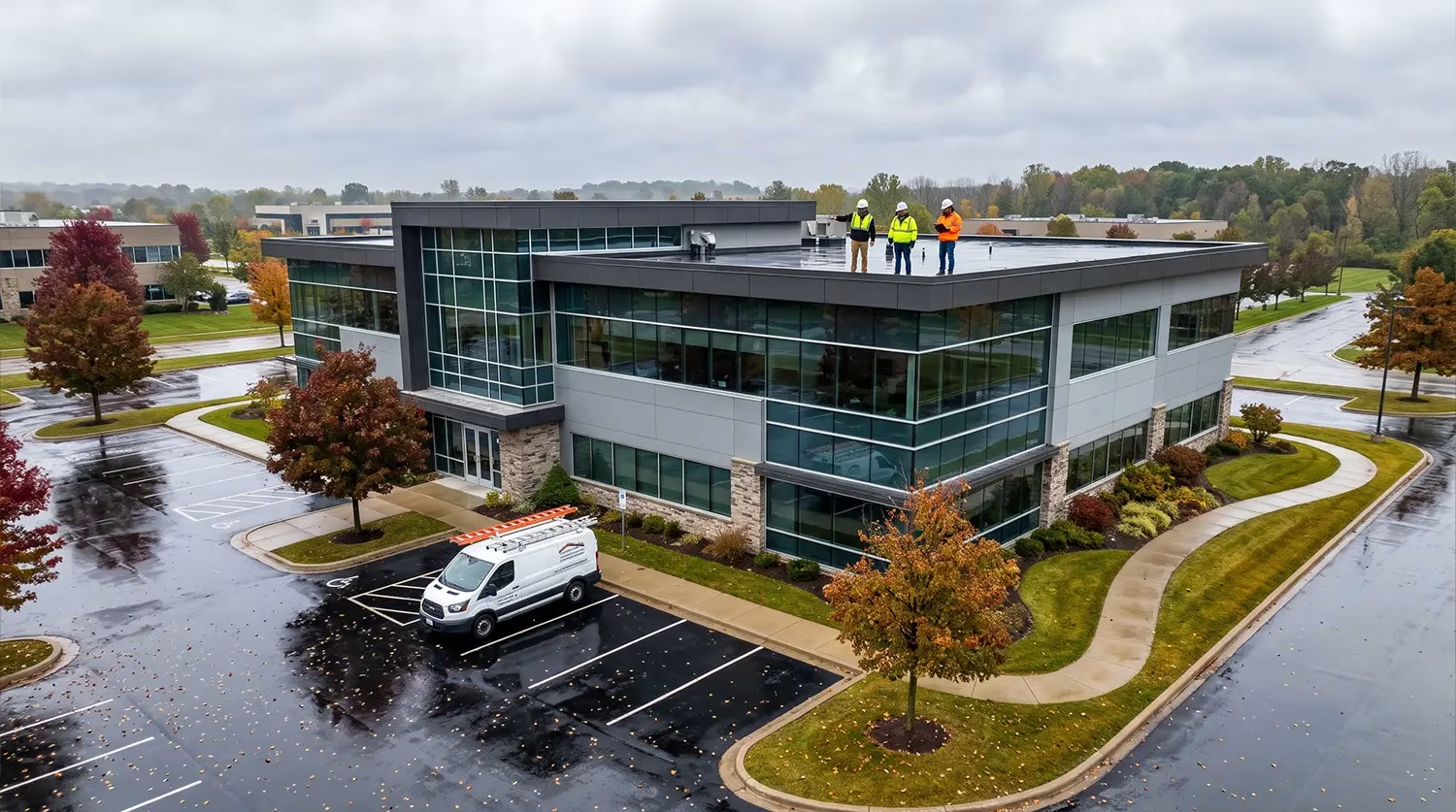
Many commercial buildings across Kentwood and Southeast Grand Rapids use low-slope roofing systems.
These systems are common on office buildings, retail properties, commercial facilities, and certain multifamily structures.
Unlike a steep residential roof, a low-slope roof manages water through a combination of surface slope, membranes, flashing, roof drains, and sometimes scuppers or internal drainage systems.
Even roofs that appear flat generally require drainage pathways to move water away from the building.
When these pathways become obstructed, water may collect in areas where it should normally drain.
The result can be increased moisture exposure, additional weight from retained water, and accelerated deterioration of vulnerable roofing components.
Five Commercial Roofing Problems to Watch for This Fall
1. Clogged Roof Drains and Scuppers
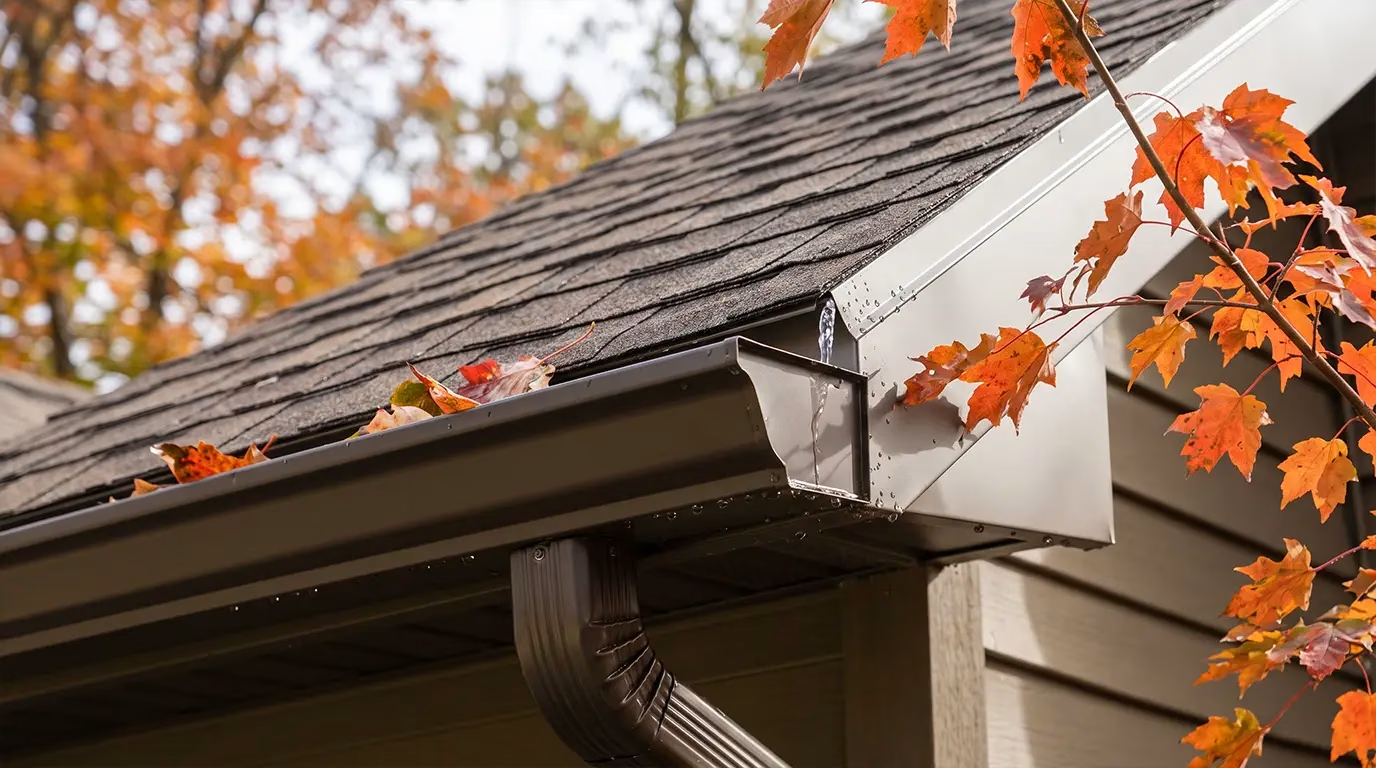
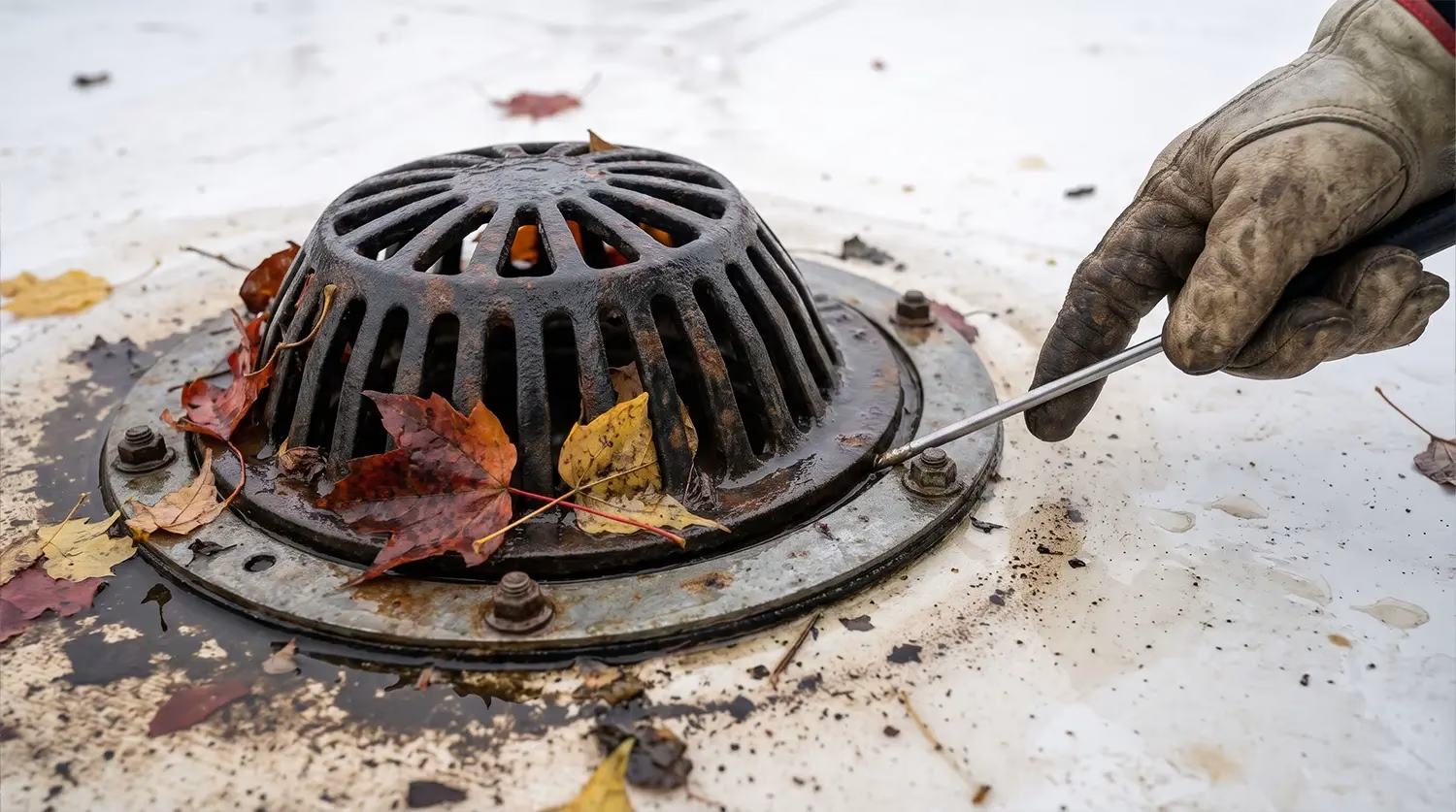
Falling leaves, twigs, windblown debris, and other materials can accumulate around rooftop drains.
When drainage openings become blocked, water may remain on the roof longer than intended.
GAF explains in its commercial roof drain maintenance guidance that properly functioning drainage helps prevent the buildup of standing water on low-slope roofing systems.
For Kentwood property managers, keeping drainage pathways functioning is an important part of protecting the building envelope.
2. Ponding Water After Rainfall
Ponding water refers to water that remains on a roof after rainfall because it cannot drain properly.
Possible causes include blocked drains, insufficient slope, settled insulation, structural deflection, or other drainage deficiencies.
Persistent standing water deserves professional evaluation because some roofing materials and details can deteriorate when exposed to prolonged moisture.
Not every temporary puddle indicates roof failure. The important question is why the water remains and whether it is affecting the roofing system.
3. Damaged Roofing Membrane Seams
Many modern low-slope systems use single-ply roofing membranes with seams that must remain properly joined and watertight.
Membrane damage may develop from aging, movement, rooftop foot traffic, equipment work, or other physical impacts.
Small separations, punctures, or damaged areas can create pathways for water intrusion.
Professional inspection can help determine whether a localized repair is possible.
4. Flashing Problems Around Rooftop Equipment
Commercial roofs frequently include HVAC units, vents, pipes, curbs, and other penetrations.
Each penetration requires appropriate waterproofing details.
Problems can develop when flashing deteriorates, becomes detached, or is damaged during equipment servicing.
Because these areas may be hidden behind mechanical equipment or located away from accessible viewing points, professional inspections are especially valuable.
5. Interior Water Stains and Repeated Leaks
Ceiling discoloration, wet insulation, stained wall surfaces, or recurring moisture problems inside a building should prompt further investigation.
Water can travel within roof assemblies before becoming visible indoors, so the point of an interior leak may not correspond directly with the exterior defect.
An accurate assessment should consider the roofing system, drainage, penetrations, and building conditions.
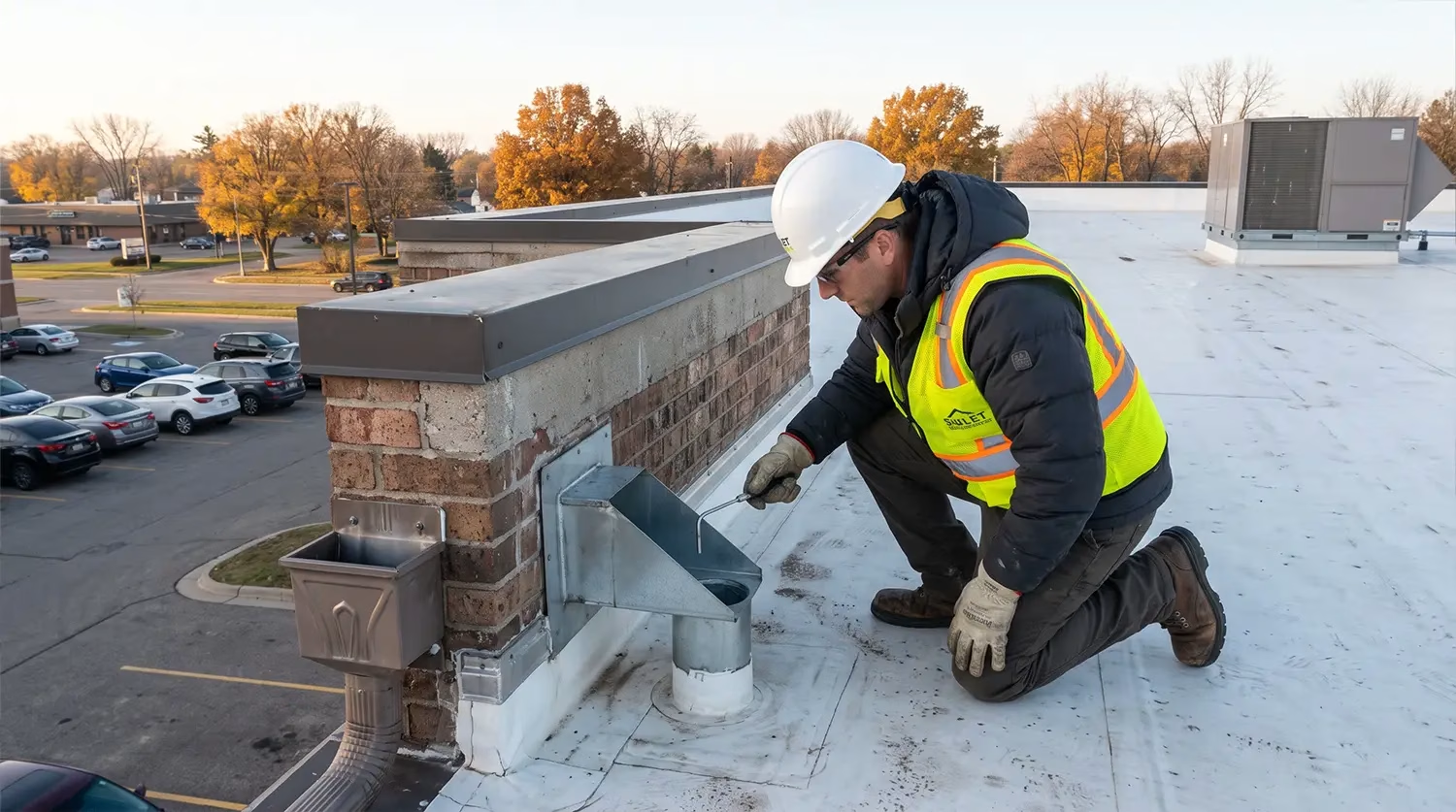
Why November Is an Important Time for Kentwood Commercial Roof Inspections
During early November, West Michigan often transitions from autumn rainfall toward colder seasonal conditions.
Leaves and other debris may already have accumulated around drainage locations.
Rainfall can reveal whether the system is functioning normally, while the weeks before sustained winter weather provide an opportunity to assess any identified concerns.
Once snow and ice become more common, roof access, inspection, and certain repair methods may become more complicated.
That does not mean every building needs a replacement before winter.
Instead, property owners should understand the current condition of the system and prioritize issues that could affect winter performance.
Safety note: Commercial rooftops may have hidden openings, slippery surfaces, electrical equipment, and fall hazards. Drain inspections and rooftop work should be performed by appropriately trained professionals.
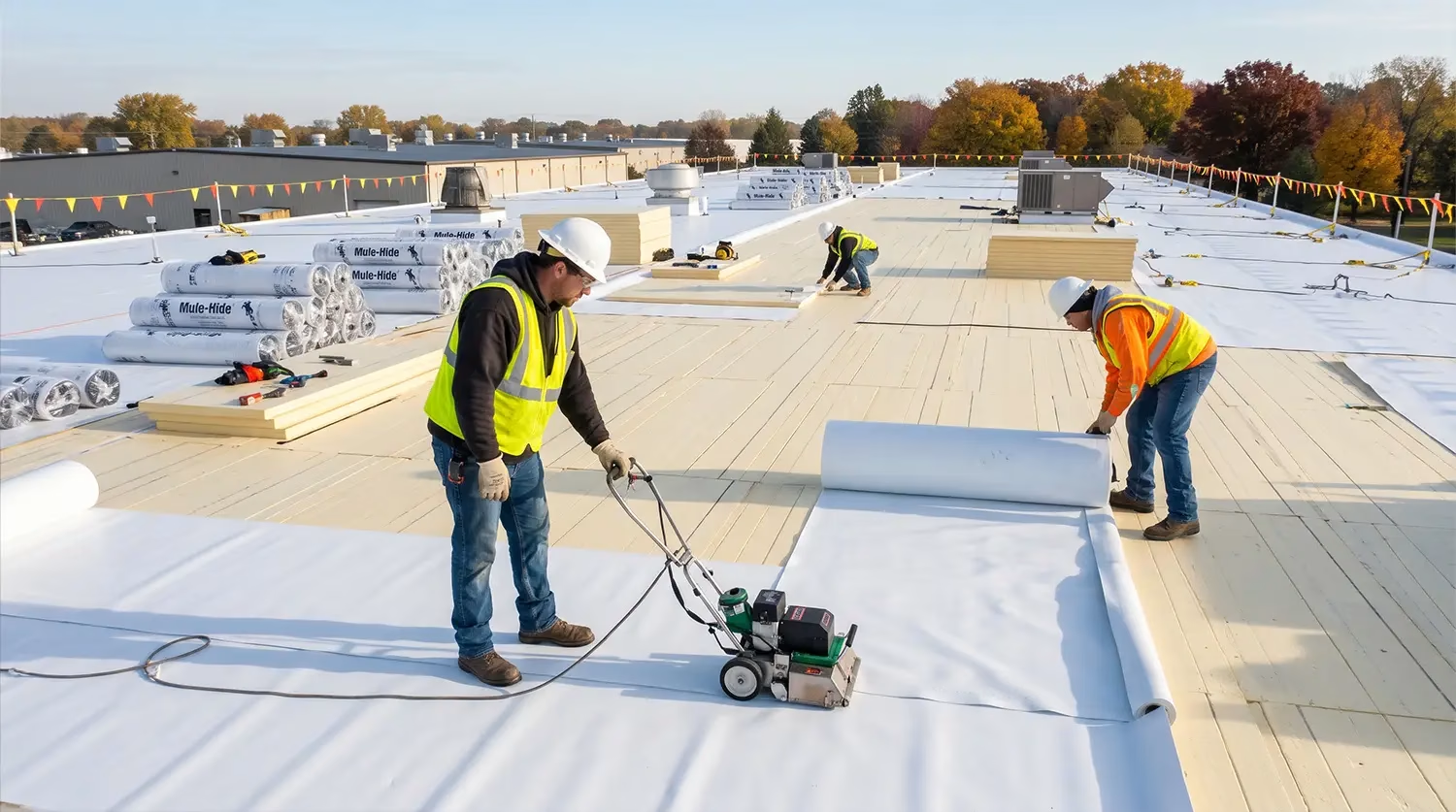
How Mule-Hide Low-Slope Roofing Fits Into Commercial Roof Replacement
When an existing commercial roof has widespread deterioration, recurring leaks, or significant membrane damage, replacement may become more practical than repeated localized repairs.
Mule-Hide offers roofing systems designed for low-slope commercial applications, including TPO membrane solutions.
TPO systems can be appropriate for many commercial properties, depending on roof configuration, existing conditions, building use, and installation requirements.
However, selecting a membrane is only one part of the roofing process.
A complete commercial roof replacement must also account for:
- Existing roof conditions and substrate preparation.
- Appropriate insulation and drainage design.
- Flashing details around penetrations and roof edges.
- Membrane installation and attachment.
- Compatibility with existing rooftop equipment.
- Manufacturer installation requirements and applicable warranty conditions.
Property Revolution Roofing and Decks works with Mule-Hide roofing systems as part of its commercial and low-slope roofing services in the Kentwood area.
Learn more about commercial roofing services in Kentwood, MI.
Commercial Roof Repair vs. Replacement: How to Decide
The appropriate solution depends on the age, condition, and performance of the existing roofing system.
Commercial roof repair may be appropriate when:
- Damage is limited to a specific location.
- Most of the membrane remains in serviceable condition.
- Existing insulation and underlying components are sound.
- The cause of water intrusion can be corrected effectively.
Commercial roof replacement may be more appropriate when:
- Leaks are frequent or widespread.
- Membrane deterioration affects large areas.
- Wet or damaged insulation requires extensive corrective work.
- The existing roof has persistent problems that cannot be economically resolved through repairs.
- The owner needs a more comprehensive long-term roofing solution.
A professional roof assessment can help establish the full scope of the problem before a property owner commits to an expensive project.
Why Preventive Roof Maintenance Matters for Kentwood Businesses
A roof protects more than the building structure.
It helps safeguard interior finishes, inventory, equipment, and the spaces where employees and customers work.
For commercial facilities, unexpected water intrusion can create operational disruptions beyond the cost of the roofing repair itself.
Regular inspections and timely corrective work can help property owners identify problems before they affect larger portions of the building.
GAF’s roof asset management guidance recommends professional evaluations that consider debris, standing water, clogged drains, flashing conditions, and other potential roofing concerns.
For commercial properties in Kentwood and Southeast Grand Rapids, a planned maintenance approach can support more predictable building management.
Frequently Asked Questions About Commercial Roofing in Kentwood
How often should a commercial roof be inspected?
A common maintenance approach is to arrange professional assessments in spring and fall, with additional inspections following significant weather events or when leaks appear. Requirements can vary by roof system and warranty.
Is standing water normal on a flat commercial roof?
Small amounts of temporary water can occur after rain, but persistent ponding should be evaluated. Properly functioning drainage is important to the long-term performance of a low-slope roof.
Can a commercial roofing membrane be repaired?
Many localized membrane defects can be repaired when the existing materials and surrounding roof assembly remain in serviceable condition. The appropriate method depends on the membrane system and damage.
Does Property Revolution provide commercial roofing services in Kentwood?
Yes. Property Revolution Roofing and Decks serves Kentwood and surrounding Kent County communities with commercial and low-slope roofing solutions, including Mule-Hide roofing systems.
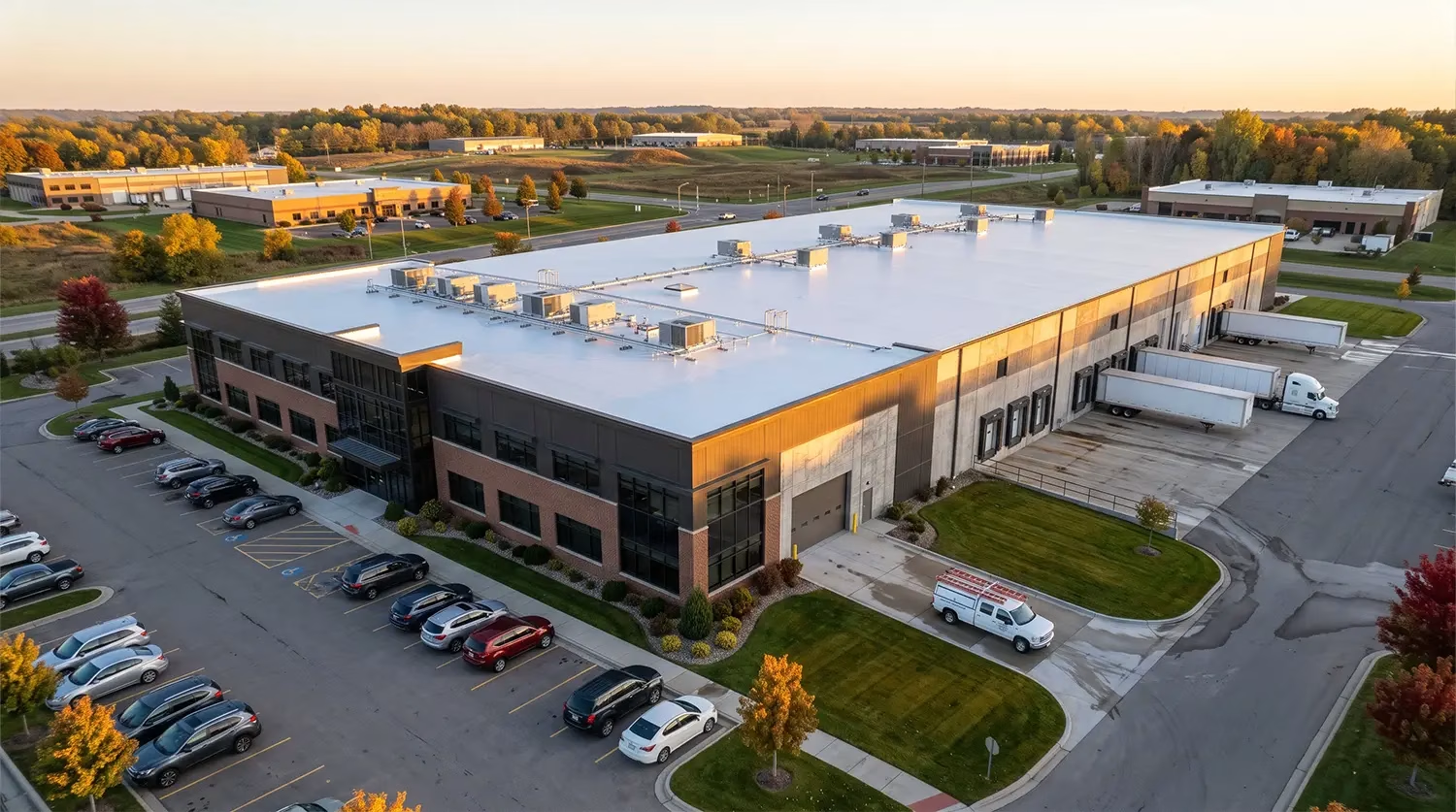
Schedule a Commercial Roof Assessment in Kentwood, MI
If your building has recurring leaks, drainage concerns, damaged roofing membranes, or signs of aging, understanding the roof’s condition before winter can help you plan your next steps.
Property Revolution Roofing and Decks serves commercial and residential property owners throughout Kentwood, Grand Rapids, Wyoming, Cascade, Byron Center, and surrounding communities.
Our team focuses on clear recommendations, manufacturer-certified roofing systems, organized project management, and long-term exterior performance.
Schedule Your Free Exterior Inspection or Get a Revolutionary Quote.
Property Revolution Roofing and Decks
4595 Broadmoor Ave SE, Ste 115, Office 109
Grand Rapids, MI 49512
Call (616) 898-3292