
A maintenance calendar helps Portage homeowners record changes and plan work before a problem becomes urgent. The months below are reminders, not a requirement to walk your roof every month. Adjust tasks to actual weather, safe access, manufacturer guidance and the roof’s condition.
A month-by-month roof care calendar
| Month | Task or observation |
|---|---|
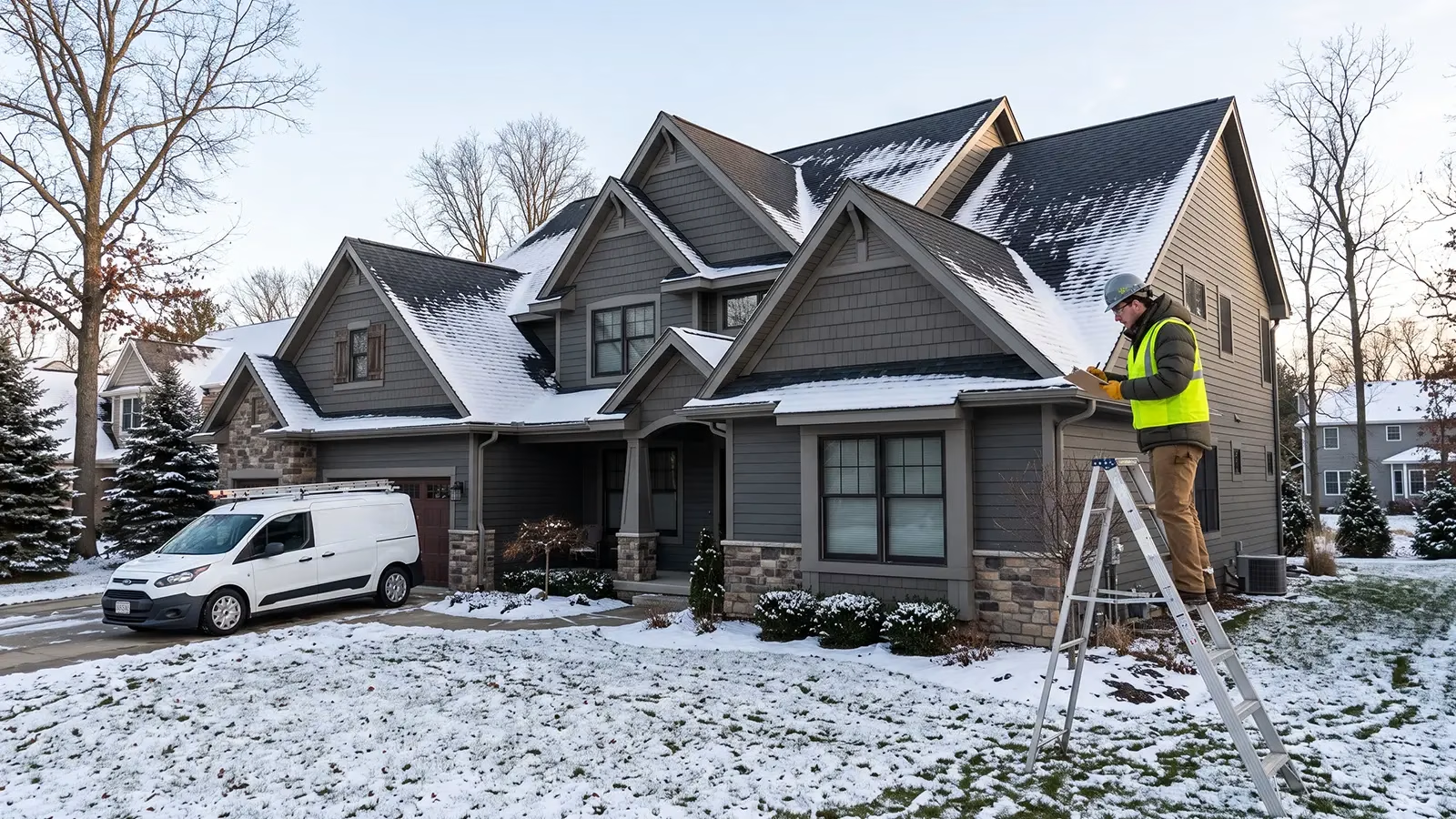
| January | Observe roof edges and interior stains after snow or a thaw; do not climb onto icy roofing. |
| February | Record drifting or recurring ice at the same locations; seek assessment for signs of distress. |
| March | After safe thaw conditions, check gutters from the ground and report fresh staining or displaced materials. |
| April | Arrange a post-winter assessment where symptoms justify it; review flashing, penetrations and drainage. |
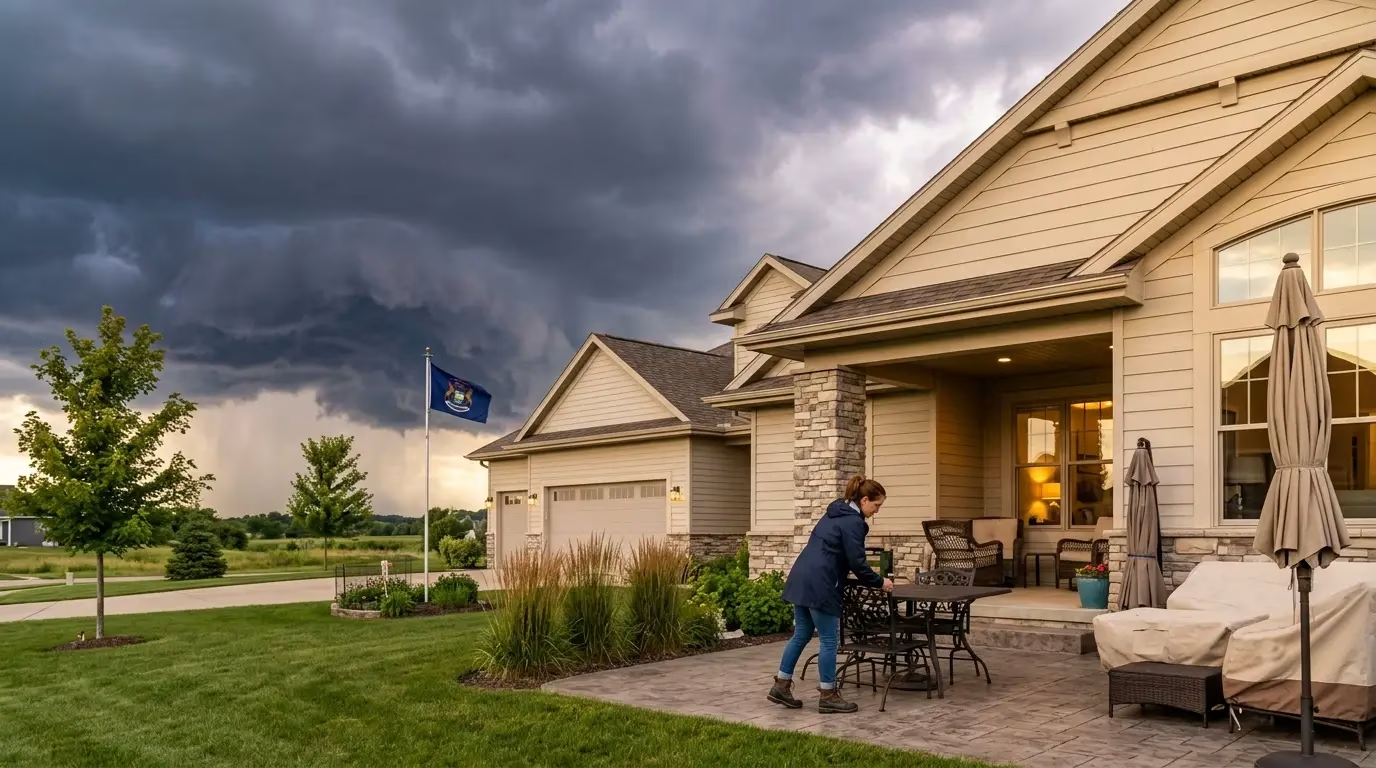
| May | Complete pre-storm repairs and keep dated exterior photographs and insurance contacts accessible. |
| June | Look for changes after storms; separate new damage from long-standing wear through an assessment. |
| July | Discuss planned replacement materials, ventilation and the written scope before selecting a system. |
| August | Check whether overhanging or damaged branches need a tree professional; plan fall maintenance. |
| September | Review previous leaks, roof edges and drainage before leaves and colder weather arrive. |
| October | Arrange safe debris clearance and address known flashing or penetration defects before freezing weather. |
| November | Observe the next rainfall for overflow or returning stains and discuss unresolved problems promptly. |
| December | Watch for new moisture during cold spells and thaws; assess condensation as well as roof entry. |
Winter: moisture and loading are different concerns
Snow depth alone does not tell you the load on a roof. For wet snow or unusual drifting, use the wet-snow guide. For repeated ice at eaves, assess heat loss and attic conditions as well as drainage. Michigan’s ice-dam guidance describes the mechanism. Moisture without recent rain may require condensation investigation.
Spring: inspect winter effects, then prepare for storms
The post-winter roof inspection guide covers possible winter damage. The spring storm preparation checklist covers vulnerabilities to address before the next storm. These tasks overlap, but their purposes differ. Do not wait for a calendar month if a leak or impact has already occurred.
Fall: resolve known defects before freezing weather
Use the seven-point fall checklist for shingles, flashing, penetrations, valleys, drainage and attic concerns. Observe gutters during rainfall from a safe position. Debris removal at height should be planned with proper access and equipment.
Keep a useful maintenance record
- Date and weather when a symptom appeared.
- Photographs from the same safe viewpoints for comparison.
- Rooms affected and whether staining changes after rain or thaw.
- Inspection findings, repair scope and receipts.
- Manufacturer and warranty information for installed materials.
A regular photo record is more informative than relying on memory. It does not by itself prove a storm caused damage. If a leak is unclear, use the Portage leak detection guide.
Fit the calendar to the home
An older house with additions may have different roof materials or separate attic spaces. A low-slope porch needs different checks from the main shingle roof. Ask what maintenance applies to each assembly and whether previous repairs need monitoring. Roof age alone is not a reason to replace it.
Discuss your Portage roof
Property Revolution Roofing and Decks provides roof repair and replacement in Portage. Tell our team what you have noticed and ask which assessment is appropriate for your project. Free estimates apply to full-service work; repair assessment options and scheduling depend on the situation.
Frequently asked questions
How often should I schedule a professional inspection?
Base the interval on condition, installation and warranty guidance, exposure and previous symptoms. New leaks or storm impacts can justify assessment between routine visits.
Should I clean a roof myself?
Do not walk on wet, icy or damaged roofing. Ask about methods appropriate to the material; aggressive cleaning can damage the roof.