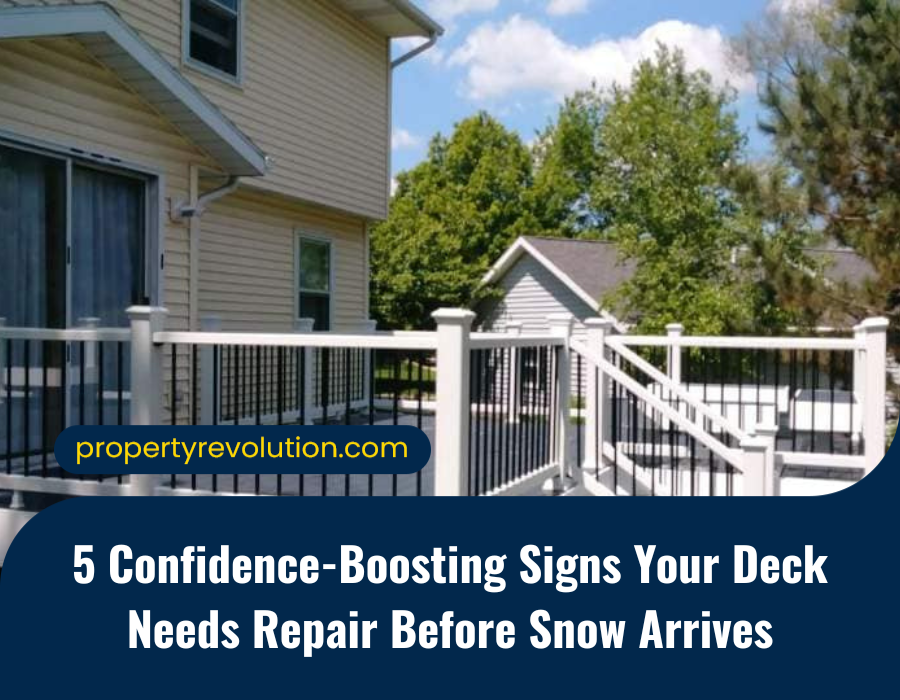
As Michigan’s temperatures begin to drop, deck repair before snow becomes a critical part of fall home maintenance. While many homeowners focus on roofing, siding, and gutters, the deck is often overlooked—even though it endures just as much exposure to moisture, summer UV damage, and seasonal wear. Addressing deck issues now is not only safer but also more cost-effective than waiting until winter causes structural stress, rot, and cracking.
This guide breaks down the most important signs your deck needs repair before snow arrives, why each issue matters, and how Michigan homeowners can prepare their outdoor spaces for freezing weather. With the right preventive steps and timely maintenance, your deck will remain strong, beautiful, and ready for spring when warmer weather returns.
1. Structural Weakness: The Most Serious Sign You Need Deck Repair Before Snow
One of the biggest indicators that you need deck repair before snow is structural weakness. The freeze-thaw cycles of Michigan winters can turn small issues into dangerous hazards. If your deck already struggles under normal conditions, snow load will worsen the problem significantly.
Common signs include:
-
Soft or spongy deck boards
-
Posts leaning or shifting
-
Loose or wobbly railings
-
Joists that sag or crack
-
Movement when walking on the deck
Snow can weigh between 15–30 pounds per cubic foot, and wet snow weighs even more. A compromised deck frame cannot safely support that weight.
If you notice any of these issues, schedule repairs immediately. For general structural guidelines, reviewing resources from the American Wood Council is helpful (AWC). But for Michigan-specific conditions, always rely on a local professional who understands snow load requirements.
Internal Link Recommendation:
Link to your existing Deck Installation or Deck Repair Page on the Property Revolution site.
2. Rotting, Splintering, or Decaying Wood
Wood rot is a silent but destructive problem that worsens significantly in winter. Moisture gets trapped beneath snow and ice, and if your deck boards are already vulnerable, rot will spread deeper.
Signs include:
-
Soft or crumbly wood
-
Discoloration (gray, black, green, or yellow patches)
-
Splintering along edges
-
Holes or channels from insects
-
Mushy wood around fasteners
This is one of the most common reasons for deck repair before snow, especially in older decks or untreated lumber. Even composite decks can experience underlying frame rot if water is entering from above.
If rot spreads to beams or joists, the entire deck’s integrity is compromised. Immediate repair prevents further damage and extends your deck’s lifespan.
3. Loose Fasteners, Pulling Nails, and Rusted Hardware
During summer, heat expands wood. During fall and winter, cold contracts it. This causes screws, nails, and hardware to shift, loosen, and weaken. Rust accelerates the problem by eating away at metal.
Warning signs include:
-
Popping nails
-
Screws backing out
-
Rust stains around fasteners
-
Loose handrails
-
Creaking or shifting boards
Hardware degradation is a clear sign you need deck repair before snow, because winter moisture will quickly rust compromised metal. Frozen water expands inside screw holes, causing more cracking and instability.
Replacing corroded hardware and reinforcing connection points ensures your deck can withstand seasonal stress.
4. Surface Wear: Fading, Peeling Stain, and Water Absorption
Many Michigan homeowners assume fading stain is only cosmetic—but surface wear reveals deeper issues. When stain or sealant fails, your deck absorbs water instead of repelling it.
Test your deck by sprinkling water on the boards. If it soaks in rather than beads, the deck is unprotected.
Signs of advanced wear include:
-
UV fading
-
Gray, dry, or cracked surfaces
-
Peeling or chipping stain
-
Uneven coloring
-
Areas that stay damp for long periods
When untreated wood goes into winter vulnerable, moisture freezes inside the fibers, causing splitting and accelerating decay.
This makes surface treatment a key step in deck repair before snow. Deck sealing or staining in fall protects it from harsh winter weather.
5. Ledger Board Problems: A Critical Safety Warning
The ledger board connects your deck to your house, and if it’s failing, your deck can collapse. Heavy snow accelerates stress on this connection point.
Signs of ledger failure include:
-
Separation from the house
-
Gaps where water can enter
-
Rusted flashing
-
Missing structural bolts
-
Visible rot around the attachment
Among all forms of deck repair before snow, this is the most urgent. If a ledger board fails under snow weight, the deck can detach from the home in a single event.
Because the ledger is so important, repairs should always be handled by a licensed deck professional rather than attempting DIY fixes.
Why Deck Repair Before Snow Is So Important for Michigan Homes
Michigan winters are extremely hard on wood structures. Moisture, freezing temperatures, ice expansion, and snow load all accelerate wear.
Timely deck repair before snow prevents:

-
Costly frame repairs
-
Slips and falls caused by loose boards
-
Water intrusion along connection points
-
Rot spreading into structural members
-
Ice damage around fasteners
-
Complete deck failure
Waiting until winter is never recommended. Repairing damage early is safer, cheaper, and more effective.
How to Prepare Your Deck for Winter After Repairs
Even after addressing issues, preparation is still important. To maximize the lifespan of your deck:
-
Clean the entire surface
-
Remove leaves and debris from gaps
-
Seal or stain the boards
-
Trim tree branches away from the deck
-
Cover items that retain moisture
-
Avoid storing heavy objects on the deck during snowy weather
-
Inspect hardware for rust or movement twice during winter
Following these steps supports the work done during your deck repair before snow and keeps your deck protected until spring.
When Repairs Aren’t Enough: Signs You May Need Replacement Instead
Sometimes winter damage risk is too high for minor repairs. You may need replacement if:
-
More than 20% of boards show rot
-
Posts or beams are severely compromised
-
The deck is older than 20–25 years
-
Ledger board has major structural failure
-
Water damage has spread across multiple areas
A professional inspection is the best way to determine the safest path forward.
Why Property Revolution Is Michigan’s Trusted Deck Repair Expert
Property Revolution specializes in deck repair before snow, deck building, seasonal maintenance, and structural assessments for Michigan homeowners. With experience across Kalamazoo, Plainwell, Portage, and surrounding areas, we understand exactly how Michigan winters affect decks.
We provide:
-
Comprehensive structural inspections
-
Detailed repair plans
-
High-quality materials rated for cold climates
-
Honest guidance on repair vs. replacement
-
Local expertise with Michigan building codes
Our goal is to help homeowners protect their biggest investment—their home—by ensuring decks remain beautiful, durable, and safe throughout the harshest winter conditions.
Final Thoughts: Catch Problems Early and Protect Your Home
Recognizing the signs your deck needs deck repair before snow is the key to preventing expensive winter damage. A well-maintained deck not only enhances home safety but also ensures long-term durability and value.
If you suspect any problems or want an expert evaluation, Property Revolution is here to help.
Schedule a fall deck inspection today to keep your deck strong, safe, and ready for winter.